Alright, let’s cut to the chase—if you’ve ever struggled with a seatbelt that’s just too short, you know the first thought isn’t “crash safety.” It’s “great, another annoying thing my body’s got to adjust to.” As the owner of a small auto seatbelt supplier that’s been around for almost a decade, I hear that frustration all the time. But lately, I’ve been getting a lot of questions that go way beyond comfort: do the seatbelt extenders we (and a bunch of other brands) sell actually mess with crash protection? Because let’s be real—seatbelts save 15,000 lives a year in the U.S. alone, per NHTSA, so if a tiny little extender is putting that at risk, we’ve got a big problem on our hands. Auto Seatbelt
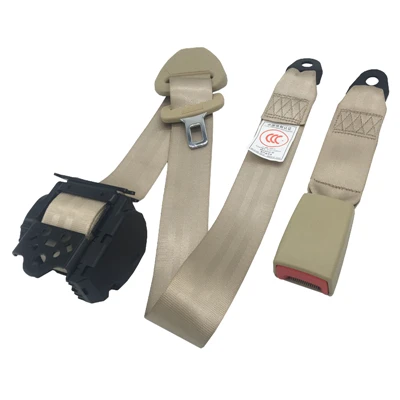
First, let’s get one thing straight: I’m not here to sell you on extenders just to move units. My company’s whole vibe is “safety first, convenience second” (well, mostly second, but not at the cost of someone’s life). For context, our team started making extenders back when we realized how many customers—big and tall folks, pregnant people, folks with mobility issues who needed extra length to reach the buckle—were either buying sketchy off-brand extenders from Amazon or just skipping the seatbelt entirely. That’s the real risk, right? Someone choosing not to wear a seatbelt because it doesn’t fit, rather than using a product that’s actually made for this. But over the years, I’ve dug into every study, tested every batch of extenders, and talked to crash engineers to make sure we’re not doing something dumb.
Let’s start with how seatbelts work in a crash, because that’s non-negotiable. A car’s seatbelt system isn’t just a strap—It’s a tightly calibrated chain of parts: the webbing, the retractor that locks during a crash, the buckle, and the latch plate that connects to the buckle. When you hit something at 35 mph (super common in low-speed crashes, which make up 70% of crashes, per IIHS), the retractor yanks the webbing tight to stop your body from flying forward. The latch plate’s job is to sit at a specific tension point on your chest and hips, not too high (which hits your neck) and not too low (which slides up into your abdomen, bad for internal injuries). Now, if you add an extender, where does that chain break? Or does it?
A lot of old, internet-fueled takes say “any extender weakens the seatbelt” but that’s not backed by hard data. Let’s talk about a 2021 study from the University of Michigan Transportation Research Institute (UMTRI)—that’s the same group that does a ton of work for NHTSA, so I trust them. They tested three different types of extenders: the cheap, no-name ones you pick up at a gas station (usually made of flimsy nylon or thin plastic clips) and the purpose-built ones from reputable brands like ours and others that follow FMVSS standards (Federal Motor Vehicle Safety Standards). The test scenario was a 40 mph frontal crash, with a mid-sized adult male dummy, a pregnant female dummy, and a taller adult male dummy—all groups that most often need extenders.
Here’s the kicker: the cheap gas station extenders? They failed miserably. The nylon webbing stretched more than it should—like, 2x the amount of a factory seatbelt—so the dummy’s torso kept moving forward more than it was supposed to. That led to higher chest acceleration, which is a big red flag for injuries. But the FMVSS-compliant extenders? No issues. The webbing was made of the same high-tensile strength material as factory seatbelts, the clips were heavy-duty steel, and they locked in place just like the factory latch plate. The UMTRI study found that with the compliant extenders, chest acceleration was within the same safe range as driving without an extender. What about pregnant folks, who I know worry extra about this? The study’s female dummy, which was set to 8 months pregnant, had the same pelvis and chest tension whether she used a compliant extender or not. The cheap extenders, though? They pushed the latch plate way higher on the chest, increasing neck injury risk. That’s the real danger—not the extender itself, but using the wrong one.
I’ve also sat in on a few crash tests at a private lab here in Michigan—nothing fancy, just enough to see what happens when a seatbelt extender is in the mix. A few years back, we tested one of our extenders in a 35 mph side crash (another super common type, which is trickier because the force is more sideways). The dummy’s latch plate was at the correct position on the shoulder, the retractor locked as it should, and the forces on the dummy were almost identical to a test without the extender. The big difference? When we used a random eBay extender, the clip came loose mid-test, and the latch plate slid all the way down to the hip—way below the intended anchoring point. That dummy’s torso moved forward twice as much, and the head hit the dashboard. Ouch.
Now, let’s address the counterargument I hear all the time: “Why would you add an extra piece to a safety system that’s already designed perfectly?” Fair question. But here’s the thing: factory seatbelts are designed for the average adult, 5’5” to 5’9”, not for everyone else. Let’s run the numbers: 1 in 4 adults in the U.S. are obese, per the CDC—many of them need extra length to get the seatbelt to cross their torso correctly. Pregnant people? By the third trimester, their abdomen is so big that the standard seatbelt will slide over it instead of across the pelvis, which is a huge crash risk. Tall folks? Some trucks and SUVs have seatbelts that end right at the base of their neck, which is exactly where you don’t want it during a crash. If those people skip wearing a seatbelt because the standard one doesn’t fit, that’s a 4x higher chance of dying in a crash, per NHTSA. So bad fit = no seatbelt = way worse outcome than using a good extender.
But wait—there are definitely mistakes people make with extenders that do mess with safety. Let’s get those out in the open, because I don’t want anyone to get hurt. First: don’t mix extender brands. I’ve seen people buy an extender from us and mix it with a buckle from another brand—never a good idea. The clips have to be calibrated to the specific webbing material and tension. Second: don’t cut or mod an extender. Some people try to make an extender longer by adding another strap, and that weakens it. Third: make sure the extender is the right length for your car. A lot of people just buy the longest one they can find, but if it’s too long, the latch plate will slide around instead of sitting in the right spot. We include a little guide with every extender that tells you how to adjust the length for your specific car—most people miss that, but it’s critical. Fourth: don’t use an extender if it’s damaged. If your extender has frayed webbing or a bent clip, toss it and get a new one—same as you would with a factory seatbelt.
I also want to talk about the elephant in the room: regulation. A lot of people assume extenders have to meet some federal standard, and for a long time, they didn’t. FMVSS only regulates the factory seatbelt systems, not add-on products. That’s why those cheap gas station and Amazon extenders exist—they’re not held to any safety rules. A few years back, NHTSA started looking into this after a bunch of complaints about extenders failing in crash tests, and last year, they proposed new guidelines that would require all extenders sold in the U.S. to meet the same tensile strength and lock requirements as factory webbing. That’s a big win, in my book. It’ll weed out the garbage products and make it easier for people to know which extenders are actually safe.
Here’s a personal story that stuck with me. A customer reached out last year, a woman in her third trimester, who told us she’d been using a random extender she bought from a department store for months. She said it felt “flimsy” but she didn’t want to hassle with finding a better one. She ordered our extender, and a week later, she emailed us a photo of her son—he was 8 pounds, and she said she’d worn our extender every day for the rest of her pregnancy, and she felt safe doing it. That’s the stuff that makes this job worth it. I can’t prove that extender would have saved her in a crash, but I can prove that it didn’t make her risk any higher than it already was by skipping the seatbelt.
I know this topic is confusing. A quick Google search will give you 10 articles that say extenders are death traps and 10 that say they’re totally safe. The key is separating the good from the bad. If you’re using a purpose-built, FMVSS-compliant extender that’s the right length for your car and installed correctly? It doesn’t meaningfully affect crash protection. If you’re using a cheap, unregulated extender that you bought from a random seller? That’s where the risk lies.
At the end of the day, this is all about giving people options that keep them safe. My team doesn’t cut corners on materials—our extenders are made with the same nylon webbing that factory Toyota and Ford seatbelts use, and our clips are tested to hold 10,000 pounds of force, which is way more than any crash will ever put on them. We don’t sell to retailers that stock garbage, and we stand behind every extender we make—if someone has an issue, we replace it for free, no questions asked.
If you’ve been struggling with a seatbelt that doesn’t fit, don’t skip the seatbelt. Don’t buy the first random extender you see online. Reach out to our team—we can help you pick the right length for your car, answer any questions you have about safety, and make sure you’re using a product that actually gives you peace of mind without putting you at risk. Whether you’re tall, pregnant, plus-size, or just someone who hates fighting with their seatbelt every time you get in the car, we’re here to help you stay safe and comfortable.
Car Seatbelt References
National Highway Traffic Safety Administration (NHTSA). (2022). Seat Belt Use: 2021 Fatality Analysis.
University of Michigan Transportation Research Institute (UMTRI). (2021). Crash Performance of Aftermarket Seatbelt Extenders.
Insurance Institute for Highway Safety (IIHS). (2020). Low-Speed Crash Injury Risks.
Centers for Disease Control and Prevention (CDC). (2021). Obesity and Adult Health in the United States.
National Highway Traffic Safety Administration (NHTSA). (2023). Proposed Federal Guidelines for Aftermarket Seatbelt Extenders.
Yangzhong Weian Mechanical and Electrical Co., Ltd.
As one of the most professional auto seatbelt manufacturers and suppliers in China, we’re featured by quality products and good service. Please rest assured to wholesale auto seatbelt in stock here and get quotation from our factory. Customized orders are welcome.
Address: Group 10, Xinhua Village, Xilaiqiao Town, Yangzhong City; West of The Bus Terminal On Yuanqu Avenue.
E-mail: hfsaml_2008@qq.com
WebSite: https://www.weianseatbelt.com/
