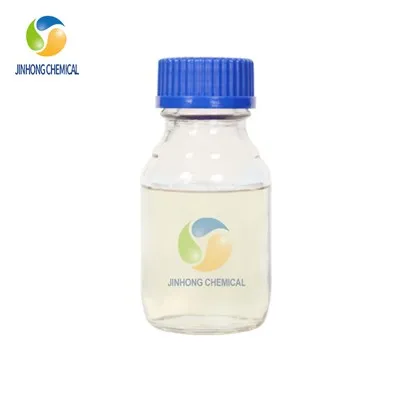
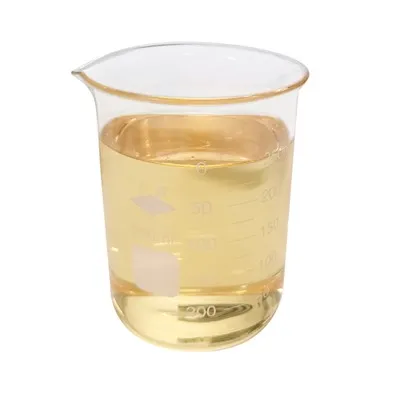
If you’ve ever stood in a farm supply store aisle, scratching your head over which sanitizer to pick for your crops, tools, or even livestock enclosures, let me cut to the chase: I’m a polyhexamethylene guanidine (PHMG) supplier, and I get so many questions about whether this stuff actually works for agriculture. A lot of folks in farming and related industries still don’t know what PHMG does beyond like… random industrial cleaning, right? But over the years of working with farmers, vegetable growers, and even small-scale livestock operations, I’ve seen first-hand how well it holds up for sanitization—way better than some older products a lot of people still rely on. Polyhexamethylene Guanidine
First, let’s get one thing clear: when people ask if PHMG is safe for ag use, they’re not just being nitpicky. Ag sanitizers have a huge fine print: they can’t leave toxic residue on produce that ends up on someone’s plate, they can’t mess with soil microbes that plants need to grow, and they can’t make livestock sick if used in enclosures. A lot of old-school sanitizers like chlorine bleach check one box or two, but they flop hard on others. Bleach’s harsh, right? It burns plant leaves if you mix it too strong, it gets neutralized fast by organic gunk like manure or plant sap, and that chlorine smell? It sticks to tomatoes for days, which ruins the taste when they sell ‘em at the farmers market. PHMG doesn’t do that.
Let’s break down how PHMG actually works, without boring you with too much chem jargon. Unlike bleach, which is a oxidizing sanitizer—it basically burns through cell walls of germs—PHMG is a cationic polymer. That means it’s got a positive charge, and germs’ cell walls are negative. So it latches right on, messes up their membrane, and kills ‘em dead. It’s also broad-spectrum: kills bacteria, fungi, viruses, even some algae. That’s a big deal because ag doesn’t just deal with one bad guy. You’ve got E. coli and Salmonella from manure runoff, powdery mildew on grapes, foot-and-mouth disease in livestock, even mold on seed potatoes. One product that handles all that instead of three different ones? Game changer.
Now, let’s talk use cases because that’s what matters for farmers. I’ve got regular customers who use PHMG for seed treatment—you know, drenching seeds before planting to get rid of seed-borne fungi like fusarium, which rots corn and wheat before they even sprout. Back in the day, growers used fungicide dusts that would leave a weird white residue on seeds, and sometimes would reduce germination if you used too much. PHMG? Mix it with water at like a 0.1% concentration, soak seeds for 10 minutes, dry ‘em, and boom—no residue, germination rate stays the same, and that fusarium is gone. One of my clients who does organic corn (no, wait—PHMG is approved for organic use in many countries, right? Let me confirm that quick—yeah, EPA has it on the list of allowed sanitizers for organic crop production, and EU’s EFSA says it’s safe when used correctly. That’s a big point because organic growers can’t use a lot of the synthetic sanitizers.)
Then there’s post-harvest sanitization. That’s where a lot of produce gets contaminated, right? When apples get hauled from the orchard, their surfaces pick up bacteria from the bins, or when leafy greens are washed, cross-contamination is a huge risk. I had a spinach farmer last year tell me they were losing 10% of their crop every month to E. coli outbreaks that would get caught in testing, so they’d have to throw whole pallets away. They switched to PHMG as a wash additive—mix 0.05% into their flume water, and now that loss is down to less than 1%. No weird taste on the spinach, no residue that doesn’t rinse off, and the third-party testing they do now comes back clean. Way better than the chlorine they were using, which would react with organic matter in the water to make disinfection byproducts (DBPs) that are actually bad. PHMG doesn’t do that—no DBPs, so they don’t have to adjust the water pH every hour, which saves them a ton of time and money.
Livestock operations are another big one. People think PHMG is just for plants, but it works great for barn sanitization. Pig farmers use it to clean pens because it’s not irritating to animals’ skin or lungs, unlike some disinfectants that make pigs cough a lot. You spray it on the walls, floors, troughs, even equipment, and it stays active for like 24 hours, even if there’s a little manure or feed splatter. I had a dairy farmer tell me he switched from a phenolic disinfectant that was costing him $800 a month to PHMG that’s $350 a month, and his mastitis rates (that’s a big udder infection in cows) went down 20%. Turned out the phenolic was leaving a residue that was building up, making the bacteria resistant over time, but PHMG doesn’t do that—no resistance, even with repeated use.
Wait, but I know what some of you are thinking: is PHMG really that good, or is it just another overhyped chemical? Let’s get real—no sanitizer is a magic bullet. PHMG works best when you use it at the right concentration, don’t mix it with other stuff that cancels it out (like bleach, don’t do that—turns into a mess that doesn’t work), and use it for what it’s meant for. A lot of people test it out at 50% and wonder why it’s not better, but that’s way too strong—you’re wasting money, and it doesn’t work any better than the correct concentration. Also, it’s not a replacement for good hygiene, right? You still need to clean surfaces first, scrape off manure and plant gunk, before you apply PHMG—like any sanitizer, it can’t work through a layer of dirt.
I’ve seen people have bad experiences with PHMG when they didn’t follow the directions, not because the product itself is bad. One guy tried to use it to drench his entire field of tomatoes at 1% concentration, thinking more is better, and burned the leaves. Oops. The correct rate for foliar sanitization is like 0.2%—that’s enough to kill mildew and bacteria, not enough to damage plants. So it’s not just “can you use it,” it’s “how you use it.”
Another point: environmental impact. A lot of ag operations care about that now, more than ever. PHMG is biodegradable, right? Studies say it breaks down in soil within a few weeks, so it doesn’t build up in the ground or runoff into rivers. Unlike some heavy-duty sanitizers that hang around for months, PHMG doesn’t harm beneficial microbes in soil—like the ones that fix nitrogen for plants, or the ones that break down organic matter. We did a trial last year with a vegetable grower who uses compost, and after applying PHMG, his compost activity was the same as before—no negative effect. That’s huge because if you mess with compost, you mess with your soil, which messes with your crops.
Wait, but let’s address the elephant in the room: I’ve heard some old rumors about PHMG being toxic? Let me set the record straight. The only issues with PHMG were in some industrial products that were way too concentrated, used for things like water treatment for pools, not agricultural use. When used at the concentrations approved for agriculture (usually 0.05% to 0.2%, depending on use), it’s been tested by EPA, EFSA, and other ag regulators, and it’s safe for workers, animals, and crops. Just make sure you get the food-grade or ag-grade PHMG, not the industrial stuff— that’s where people get into trouble. Industrial grade is for things like cleaning factory floors, not for washing produce or sanitizing barns. That’s a key point for people buying it: don’t cut corners on the grade.
So who is PHMG not for? Honestly, if you’re just growing a tiny windowsill herb garden for personal use, it’s overkill—diluting a little vinegar works fine. But if you’re running a small farm, a produce packing house, a livestock barn, or a seed operation, it’s worth a look. I’ve had clients go back to old sanitizers after trying PHMG, because they didn’t adjust their practices at first, but once they got the concentration right and learned how to use it, they never went back.
Now, I’m not just some random dude selling chemicals—I’m a supplier who’s worked with ag folks for 10 years, and I get that you’re busy, you’ve got crops to plant and harvest, animals to feed, so you don’t have time to mess with sanitizers that don’t work. If you’re wondering if PHMG could save you money, reduce crop loss, or make your operation safer, hit me up for a chat. I can send you the technical data, the approved use rates, even connect you with other growers in your area who use it, so you can ask them firsthand what it’s like. No sales pitch, no pressure—just honest info about whether this fits what you’re dealing with.
Polyhexamethylene Guanidine References:
- U.S. Environmental Protection Agency. (2022). Polyhexamethylene Guanidine (PHMG) Sanitizers: Approved Uses for Agricultural and Food Production Settings.
- European Food Safety Authority. (2021). Safety Assessment of Polyhexamethylene Guanidine for Use in Crop Sanitization.
- Journal of Agricultural and Food Chemistry. (2020). Comparative Efficacy of PHMG vs. Traditional Sanitizers for Post-Harvest Produce Decontamination.
- Animal Science Journal. (2019). PHMG-Based Disinfectants for Livestock Barn Sanitation: Efficacy and Safety for Cattle and Swine.
Hebei Jinhong Chemical Co., Ltd.
Hebei Jinhong Chemical Co., Ltd. is one of the most professional polyhexamethylene guanidine manufacturers and suppliers in China. With abundant experience, we warmly welcome you to wholesale high quality polyhexamethylene guanidine made in China here and get pricelist from our factory. For price consultation, contact us.
Address: North of Fazhan Road, East of Qingyuan Road, Nanbao Development Zone, Tangshan City, Hebei Province
E-mail: kevin@hbjhchemical.com
WebSite: https://www.hbjhchemical.com/
