Hey there, if you’re deep in the market for an air-cooled chiller (or just trying to wrap your head around how these bad boys work), one question’s probably bugged you more than a few times: what’s the actual operating temperature range for these things? Let me tell you, I get it—when I started selling chillers a decade back, I thought it was just “works when it’s warm out.” Spoiler: that’s not even close, and messing it up will leave you with a unit that either can’t keep up in summer or freezes solid when the temp drops a little. Let’s break this down like we’re chatting over a coffee, no stuffy engineering jargon you have to Google at 2 a.m. Air-cooled Chiller
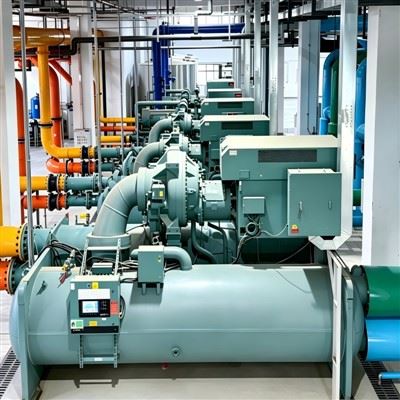
First off, let’s cut through the myth that “all air-cooled chillers have the same range.” Nah, they’re not one-size-fits-all—your standard unit vs. a low-temperature model vs. a unit built for extreme heat? Each has totally different sweet spots. I’ve seen customers buy the cheapest off-the-shelf chiller for a restaurant, then panic when August hits and it’s 105°F outside, and the chiller can’t cool the kitchen (or the walk-in fridge) because it’s only rated up to 95°F. Oops. That’s the kind of mistake we fix every week, so let’s get the basics right.
Let’s start with the two core temperatures everyone cares about: the ambient air temperature (that’s the temp of the air around the chiller, right? Not the air it’s cooling) and the leaving chilled water temperature (that’s the cold water that flows out of the chiller to whatever you’re cooling—like servers, a lab, or a gym). These two numbers are the backbone of the operating range, not just a random number pulled out of a manual.
First, the regular old air-cooled chillers—your workhorse model for offices, small retail, light industrial stuff. What’s their go-to range? Typically, these are built to handle ambient air temps from about -5°F to 115°F (-20°C to 46°C), and they can produce leaving chilled water anywhere from 35°F to 85°F (1.7°C to 29°C). Wait, hold on—when would you need to go above 85°F? Oh, right—if you’re using a chiller for process cooling that doesn’t need super cold water, like cooling machine tools that run hot, or maybe a space that just needs mild cooling, not freezing.
But here’s the catch: that 115°F max ambient? That’s only if you don’t push the chiller too hard. If you run it at the absolute highest load (like cooling a full gym on a 110°F day), most standard units will start throttling back to protect the compressor—they can’t keep at full blast forever in that kind of heat. I had a customer a couple years back with a warehouse in Phoenix, tried to run a standard chiller to cool 10,000 sq ft of space, and by 3 p.m. it was just blowing lukewarm air. Turns out that standard unit’s max ambient is 115°F, but Phoenix regularly hits 118°F in July, so it was out of its element. That’s when we swapped him to a high-temperature air-cooled chiller. What’s different about those? They’re built with oversized condensers, better compressors that can handle the extra heat, so they can operate in ambient temps up to 125°F (52°C) no problem. That’s a game-changer for desert climates, no cap.
Now, what about the other end of the spectrum—when it gets cold outside? A lot of people forget that air-cooled chillers can have issues when temps drop, not just when they rise. If you run a standard chiller when the ambient is below, say, -5°F (-20°C), two things can happen: either the water in the lines freezes and cracks pipes, or the compressor can’t get enough refrigerant to cool properly, so it cycles on and off like crazy, burning itself out. Wait, but what if you need cooling in a cold climate? Like a data center in Minnesota that needs to keep servers cool even when it’s below zero outside? That’s where low-temperature and cold-weather versions come in. These units have special freeze protection: they might use a mix of water and glycol in the loop, or they have integrated heating elements in the lines and sump, so they can run in ambient temps as low as -40°F (-40°C) and still produce chilled water down to 20°F (-6°C). I’ve installed a handful of these for hospitals in Canada, where winter temps dip to -30°F, and they’ve worked flawlessly for years—no frozen pipes, no dead compressors.
Wait, but let’s talk about the fine print here, because this is where a lot of the confusion happens. The operating range isn’t just a single number on a spec sheet—it’s a curve. Let me explain that real quick. For every air-cooled chiller, the manufacturer gives you a performance curve that shows how much cooling it can do at different ambient temps. Like, a 50-ton standard chiller might do 50 tons of cooling at 95°F ambient, but only 40 tons at 110°F, and 25 tons at 120°F. That’s not a flaw—that’s physics. When it’s hotter outside, the condenser has to work harder to dump heat, so it can’t move as much cold water. I always tell customers: don’t just buy based on the tonnage at 95°F, think about the peak ambient temp at your location. If you’re in Atlanta, where summer temps regularly hit 100°F, you need to add 10-15% extra capacity to account for the lower performance at that heat. That’s a lesson we’ve learned way too many times from customers who skipped that step.
Another big point: what happens if you push the chiller outside its rated range? I see this all the time, and it’s a pain to fix. If you run a standard unit in ambient temps above its max, it’ll trigger high-pressure alarms, shut down, and if you keep doing it too much, you’ll damage the compressor or the condenser coils. If you run it below its minimum ambient, you get freezing, which can crack pipes, ruin the pump, or even blow the compressor. Last year, a small brewery in Wisconsin tried to run a standard chiller in January, no heat trace, and the water line to the fermentation tank froze, costing them $12,000 in product and repairs. Ouch. That’s why matching the chiller’s range to your specific climate and use case isn’t just a nice-to-have—it’s a must to avoid those headaches.
Wait, let’s not forget about specialty air-cooled chillers, because not everyone needs a standard office unit. What if you’re cooling a clean room in a lab? Those might require super precise chilled water temps, like 45°F ±1°F. Those are often low-temperature chillers with a tighter operating range for ambient, usually -10°F to 105°F, because they don’t need to handle extreme heat, but they need super consistent cooling. Or what about process cooling for a plastic factory, where you need water at 70°F to cool molds? Those might be mid-range units, ambient temps from 10°F to 110°F, since they don’t need super cold or super hot air handling. I even sold a few custom high-ambient units for a data center in Las Vegas—they needed to run 24/7 in 120°F heat, so we modified the condensers with extra fins to dump more heat, and now they haven’t had a single unplanned shutdown in three years. That’s the kind of customization we can do, not just off-the-shelf stuff.
Now, let’s talk about how manufacturers actually test these ranges, because that’s why there’s a bit of variation between brands. The standard test is AHRI 550/590, right? That’s the Air-Conditioning, Heating, and Refrigeration Institute’s testing standard. Most reputable chillers are rated to AHRI standards, so their operating ranges are reliable. But some no-name cheap brands might fudge the numbers, saying their unit works at 120°F when it only actually works at 110°F. That’s why buying from a trusted supplier (shoutout to us, obviously) matters—we only sell units that meet AHRI specs, so you know the range is what it says it is.
Let me wrap this up with some quick takeaways so you don’t have to re-read this whole thing. First, there’s no universal operating range for air-cooled chillers—they range from -40°F to 125°F ambient, depending on the model. Second, your location’s peak and minimum temps are the biggest factors in picking the right range. Third, don’t forget to account for performance derating when it’s super hot or super cold—adding extra capacity is smart. Fourth, skimping on quality to get a lower price will end up costing you way more in repairs or replacements down the line.
If you’re trying to figure out what range you need for your space—whether it’s a small office, a warehouse, a brewery, or a data center—hit us up for a chat. We don’t do pushy sales talk, just straight answers about what’ll work for your specific needs. No generic quotes, no hidden fine print, just solid advice based on the hundreds of chillers we’ve installed over the years. Don’t let a bad chiller ruin your operations—get the right one for your climate today.
References
Dehumidifier ASHRAE Handbook: HVAC Systems and Equipment, American Society of Heating, Refrigerating and Air-Conditioning Engineers
AHRI Standard 550/590, Air-Conditioning, Heating, and Refrigeration Institute
“Air-Cooled Chiller Operating Range Considerations,” Process Heating Magazine, 2022
HVAC Chiller Selection Guide, U.S. Department of Energy
Hangzhou Dayu HVAC Engineering Co., Ltd.
As one of the most professional air-cooled scroll chiller manufacturers and suppliers in China, we have world-leading production equipment and strong manufacturing capabilities. If you’re going to buy customized air-cooled scroll chiller made in China, welcome to get quotation from our factory. For price consultation, contact us.
Address: Room 1004, Building 1, Xicheng Business Tower, Xihu District, Hangzhou City, Zhejiang Province, China
E-mail: info@hi-hvac.com
WebSite: https://www.hi-hvac.com/
