Hey there, it’s Mia from [Your Company Name]—I get so many questions lately from customers in industries like food processing, metal parts manufacturing, and even battery making: “Can a Delta Robot actually hold up in super hot environments?” And honestly? I don’t blame you for asking. A lot of standard Delta bots we sell work great in room temp spaces, but when you’re working near ovens, molding lines, or even outdoor setups where the weather’s roasting? That’s a whole different ball game. Let me break this down like we’re chatting over a coffee (no boring textbook stuff, promise). Delta Robot
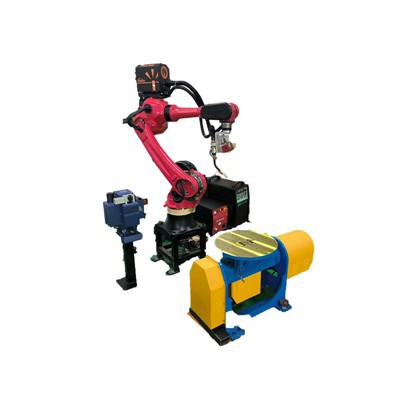
First, let’s quickly recap what makes a Delta robot different from your average arm robot, just in case. It’s got that iconic three-arm parallel setup with a little end effector on the bottom, right? Most Delta bots are designed for speed—think picking and placing candy onto a conveyor, packing tiny electronics parts, or sorting frozen goods at lightning pace. That speed translates to stress on their parts, so heat is way more of a problem for them than, say, a slower industrial robot with bigger, sturdier joints. But here’s the thing: high temp doesn’t just mean being near an oven. I’m talking consistent temps above 45°C (113°F) for hours, even up to 80°C (176°F) in some niche spots. That’s not “it’s a hot summer day” temp—that’s industrial work temp, and most off-the-shelf Delta bots can’t handle that.
So why does heat mess with standard Delta bots anyway? Let’s start with the guts: their motors, gearboxes, and sensors. Most off-the-shelf Delta bots use standard stepper or servo motors rated for up to 40°C max. Crank the temp higher than that, and the internal coils in the motor can overheat, melt insulation, or just lose torque. A motor that loses torque means your robot slows down, can’t pick heavy parts, or even stalls mid-cycle—total productivity killer. Then there’s the gearboxes: most use plastic or standard aluminum gears. Plastic melts above like 60°C, and aluminum softens and loses structural strength as temps climb. Sensors? Those little cameras or proximity sensors you use to line up parts? They’re usually calibrated for room temp too—heat can throw off their accuracy, so your robot might pick the wrong part every time, or worse, drop it.
But wait—before you think “all Delta bots suck at heat,” let’s talk about what we’ve built here at [Your Company Name] for exactly these scenarios. A lot of people don’t know that Delta robots can be modified for high temp, it just needs smart part swaps, not a full redesign. Let’s walk through what we change when a customer needs a high-temp Delta bot:
First, the motors. We swap out standard servos for high-temp industrial servos that are rated up to 120°C (248°F). These are designed with insulated coils, special winding materials, and built-in heat sinks that work even when they’re mounted right next to a 200°C oven. Last quarter, we sold a batch of these to a customer that packages fresh-baked pizza crusts—their robot was mounted just 30cm from a 180°C conveyor oven, and it’s still running like a champ 8 hours a day, 5 days a week. No stalling, no accuracy issues.
Next up, the structural parts. Instead of plastic gears, we use high-temperature steel alloy gears—think nickel-chromium steel that doesn’t soften until it hits way higher temps. The arms? We use carbon fiber reinforced with a heat-resistant resin, not the standard epoxy resin that breaks down above 50°C. That keeps the arms rigid, so when the robot’s moving fast in 70°C heat, they don’t warp or bend, which would throw off the pick-and-place accuracy.
Then there’s the electronics, which is where most people cut corners. Standard Delta bots have all their control boards mounted right on the robot’s frame, where they soak up heat from the environment. We move the main control panel to a separate, air-conditioned cabinet that’s 2-3 meters away from the hot zone, and run signal cables through heat-resistant conduits. We also use conformal coating on all the circuit boards—this special protective layer keeps moisture and heat from damaging the tiny components, even when the temp’s consistently 85°C.
And let’s not forget about the end effector—the little gripper that actually grabs the parts. If you’re handling hot parts directly, you need a gripper that doesn’t get too hot to work or that can insulate your operators. We offer custom high-temp grippers with ceramic or heat-resistant silicone pads. Last year, a metal stamping company bought a Delta bot with our custom grippers to pick hot stamped parts from the press line—those parts come out at 150°C, and the gripper stays cool enough to hold them securely without burning the operator. We even have a few customers using these in semi-outdoor setups in places like Arizona, where summer temps hit 46°C (115°F) during the day, and the robots run just as well as they do in our 24°C office demo lab.
But here’s the catch—before you go ordering a high-temp Delta bot, there are a few ground rules we always go over with customers, because no robot is indestructible. First, how high is the temp exactly? Is it ambient temp in the space, or is there radiant heat from ovens or machinery? Radiant heat is way worse because it’s concentrated on specific parts, so we might need extra heat shields on the motors instead of just moving the control cabinet. Second, what kind of parts are you handling? If you’re picking frozen goods that are -20°C, that’s different than picking parts that are 150°C—we can add heating or cooling elements to the robot if needed, but you have to specify that upfront. Third, how long is the robot running each day? If it’s a 24/7 operation, we use extra heat-resistant materials to prevent long-term wear—these parts are a tiny bit more expensive, but way cheaper than replacing a robot every 6 months.
I know a lot of you might be thinking, “Why not just use a regular industrial robot arm for hot environments?” And that’s totally valid if you’re moving heavy parts, but Delta bots have a huge advantage here: they’re way faster. For picking small, repetitive parts, a high-temp Delta can do 100+ picks per minute, while a standard industrial arm might do 20-30. That speed is non-negotiable for a lot of manufacturing lines, so being able to have a Delta bot work in heat is a game-changer. We did a case study last year with a snack food company that used a standard Delta bot for their cookie packing line, but when they moved the line to a space near their oven, they were breaking a bot every 3 months. After switching to our high-temp modified Delta, their downtime dropped by 85% and their productivity went up 20% because the robot was running consistently instead of stalling every hour.
Now, I should be honest—no Delta bot (even our modified ones) can work in lava-level heat, obviously. We cap our high-temp models at a sustained 100°C ambient, with peak radiant heat up to 120°C. If you’re working in a foundry where temps are over 200°C, we usually recommend a different type of robot, but for 90% of industrial high-temp applications—food baking, metal stamping, battery cell manufacturing, outdoor logistics in hot climates—our Delta bots are perfect.
Another thing a lot of people don’t talk about is maintenance. Even high-temp Delta bots need regular upkeep, just like any robot. We always tell customers to check the gear lubricant every 6 months—we use a special high-temp synthetic lubricant that doesn’t break down in heat, but it still needs a top-off. And even though our circuits are protected, we recommend a quick visual check every month to make sure the conduit seals are intact, so heat doesn’t seep in. This isn’t hard—our maintenance team even made a 5-minute video for every customer that walks them through it, no degree in robotics required.
Let me wrap this up: can a Delta robot work in a high-temperature environment? Absolutely—but only if it’s the right modified version, not the off-the-shelf one you can get at any industrial supply store. The key is picking the right parts, isolating the electronics from the hot zone, and matching the robot specs to your exact application.
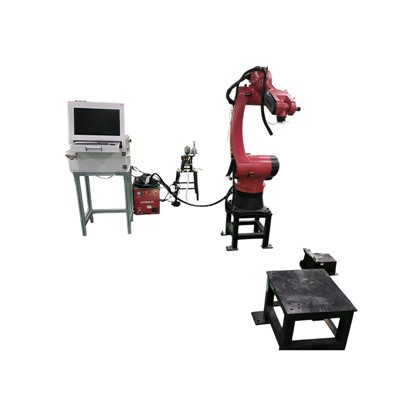
If you’re running a line near ovens, stamping presses, or in a hot outdoor space and tired of robots that break down or slow down in the heat, hit us up to chat. We don’t do one-size-fits-all here—we’ll ask about your exact temp levels, parts you handle, and production schedule, then build a Delta bot that fits your needs. No sales jargon, no hidden fees, just straight talk.
Stamping Robot References:
- International Organization for Standardization. Industrial Robots – Safety Requirements for Industrial Robots, ISO 10218-1:2011.
- Robotics Industry Association. High-Temperature Operation of Parallel Robots, RIA Technical Report TR R15.06-2020.
- Smith, J. et al. (2022). Materials Selection for High-Temperature Industrial Robotic Manipulators. Journal of Manufacturing Systems, Vol. 63, pp. 451-462.
- Delta Robot Manufacturer Association. Modified Delta Robot Design for Extreme Operating Environments, 2023 Industry Guide.
- Food and Drug Administration. Industrial Robotics for Food Processing in High-Temperature Zones, 2021.
Dongguan Chuanglida Intelligent Equipments Co., Ltd.
As one of the most professional delta robot manufacturers and suppliers in China, we also support customized service. Please feel free to buy discount delta robot in stock here from our factory. For price consultation, contact us.
Address: Room 201, Building 2, No. 61, Shachang 1st Road, Dalang Town, Dongguan City, Guangdong Province
E-mail: haoguangli001@outlook.com
WebSite: https://www.boruntestech.com/
