As a display shelf supplier with over a decade in the business, I’ve spent countless hours observing what separates a shelf that holds products and one that amplifies them. Too many vendors cut corners on materials, layout, or usability, and the end result is a shelf that doesn’t serve its core purpose: connecting products to customers. When clients come to me asking about “high-end” display shelves, I don’t just talk about sleek design or a high price tag—we dive into features that deliver measurable value, from in-store sales lift to long-term durability. Let’s break down the features that make a display shelf truly high-end, rooted in what I’ve learned from working with boutique brands, luxury retailers, and pop-up shops across North America. Display Shelf
First, there’s the structural integrity that goes far beyond basic wood or plastic. I’ve seen cheap display shelves warp after three months of heavy use, especially in grocery stores or beauty sections where shelves hold 10 to 15 pounds of products every day. High-end display shelves use materials engineered for consistent, long-term load capacity. For solid construction, I stick with baltic birch plywood for non-metal frames—it’s denser than standard plywood, resists warping from temperature fluctuations, and has a smooth grain that looks polished without extra finishing work. For metal frames, we use 14-gauge steel, not the thin 18-gauge stuff that bends when you hang a heavy sign or stack a case of skincare samples. Even the fasteners matter: I’ve tested coarse-thread screws that strip after a few assemblies, so now we use precision-cut, corrosion-resistant steel screws with self-drilling points, which cut installation time by 30% and prevent wobbly joints. One client, a premium coffee roaster, told me their old shelves required weekly adjustments to fix sagging middle tiers; since switching to our heavy-duty steel shelves, they haven’t had a single repair request in two years. That’s the kind of structural reliability that defines a high-end shelf—it doesn’t just look good on day one, it holds up for years of daily use.
Next, adjustable modular design that adapts to changing retail needs. Luxury brands don’t have static product lines—they launch limited editions, swap seasonal collections, or rearrange displays for holiday promotions. A high-end display shelf shouldn’t lock you into a fixed layout. Our modular shelves use a slot-and-pin system instead of screw holes, so tiers can be repositioned in 1-inch increments, not just the standard 3 or 6 inches. That’s a small detail, but it makes a huge difference: for a skincare brand that wanted to feature a new serum at eye level, not the fixed 12-inch tier height, they can adjust in minutes without tools. We also design interchangeable components: add a glass riser for high-value perfume bottles, swap out a wooden base for a metal one for a modern pop-up, or add a hanging rod for small accessories like scarves or jewelry. I once worked with a denim brand that used the same base shelves for three years: in spring, they swapped in slotted tiers for rolled jeans; in fall, they added a center shelf for sweaters; during holiday season, they attached LED light strips to the modular top bar. No other supplier offered that flexibility, so they kept coming back for reorders. Modular design isn’t just about adaptability—it’s a cost-saver for retailers, who don’t have to buy new displays every time their product mix changes.
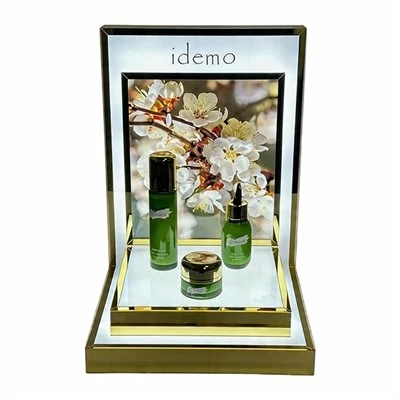
Then, precision in visual merchandising that turns shelves into product storytellers. A high-end display shelf doesn’t just hold products; it guides a customer’s eye to what matters most. That starts with tier height and depth. The optimal eye-level shelf is 57 to 60 inches from the floor—studies show that’s where 70% of customers look first, so we make that tier adjustable to hit that sweet spot. Depth is equally important: a 10-inch tier works for small skincare bottles, but a 12-inch tier is too deep for a customer to reach the back without bending, leading to wasted space. We design tiers to be 8 to 10 inches deep for countertop displays and 12 inches for floor stands, with a slight backward slope (1 to 2 degrees) to keep products from falling off and to make every item clearly visible. For lighting, which is non-negotiable for high-end displays, we don’t use bulky overhead fixtures—we integrate thin, dimmable LED strips into the shelf’s top bar or under tiers, with a color temperature of 3000K to 3500K, which mimics natural daylight and makes product colors look accurate. We once had a fine jewelry client who switched from our competitors’ bright cool-white lights; their sales of silver pieces went up 22% within a month after we installed warm-white LEDs that brought out the metal’s luster. Another key visual detail: no protruding edges or sharp corners that can scratch products or injure customers. All our shelves have rounded, smooth edges, even on metal frames, so a customer can brush against the shelf while browsing without worrying about snags. That attention to small, customer-focused visual details is what elevates a shelf from functional to high-end.
Usability for both customers and staff is another defining feature. A display shelf that’s hard to restock will sit empty half the time, and one that’s hard to browse will turn customers away. For staff, we design rear access panels that slide open easily, no tools required, so restocking backstock takes half the time of traditional shelves with hidden compartments. We also add a built-in cable management system—small channels along the back of the shelf to hide power cords for LED lights, card readers, or charging stations. Nothing looks worse than a cluttered display with wires dangling. For customers, the shelf should be stable enough to lean on while looking at products, but not so heavy that it’s hard to move during a store layout refresh. Our floor stands have a weighted base (filled with sand or water, sealed so no leakage) that prevents tipping, even when a child leans on it or a customer pulls out a heavy product. One of our biggest clients, a high-end grocery chain, told us that reduced restocking time cut their labor costs by 15% annually for shelf maintenance, and the stable bases reduced customer complaints about wobbly displays. Usability isn’t just an afterthought—it’s a core feature that affects both sales and operational efficiency.
Sustainability, which has become a non-negotiable for most premium brands, is another key feature of high-end display shelves. Consumers now prioritize brands that care about the environment, and their in-store displays should reflect that. We source 90% of our materials from FSC-certified forests for wood, and recycled steel for metal components. We also design our shelves to be recyclable at the end of their life—no mixed materials that are hard to separate. For example, our modular shelves have separate wooden tiers and metal frames, so when a retailer no longer needs them, they can recycle each component instead of sending the whole shelf to a landfill. We also offer take-back programs for used displays; when a client upgrades their layout, we pick up old shelves and refurbish them for resale, reducing waste and lowering costs for small businesses. One boutique sustainable apparel brand chose our shelves over a cheaper option because of our sustainability credentials; they told me their customers ask about the displays’ materials, and being able to say they’re made from FSC wood and recycled steel adds to their brand’s story. High-end shelves don’t just look good—they align with a brand’s values, which resonates with today’s conscious consumers.
Warranty and customization that goes beyond off-the-shelf options is the final, often overlooked, feature. A high-end display shelf should come with a warranty that reflects the supplier’s confidence in their product. We offer a 5-year warranty on structural defects—most competitors only offer 1 or 2 years. That’s because we test every shelf we manufacture, simulating 10 years of daily use in our warehouse to catch weak points before they reach clients. Customization is another part of that: we don’t just offer standard sizes. If a client needs a shelf that fits a narrow aisle in a specialty store, or a branded finish that matches their packaging, we can adjust dimensions, add a logo engraving, or match a specific paint color. I recently worked with a small artisanal chocolate brand that wanted shelves shaped like tiny chocolate bars, with their logo printed on the front; we didn’t have that design in our catalog, but our in-house design team created a prototype in two weeks, and the shelf has become a signature part of their pop-up displays. That level of support—from design to installation—sets a high-end supplier apart from the ones who just sell you a generic shelf.
Over the years, I’ve learned that a high-end display shelf isn’t about flashy details or a steep price tag. It’s about balancing durability, flexibility, visual appeal, usability, sustainability, and support—all to help a brand connect with its customers better. Cheap shelves might save money upfront, but they end up costing retailers in repairs, lost sales, and having to replace them too soon. When you invest in a high-end display shelf, you’re investing in a tool that works as hard as your products do. If you’re a brand, retailer, or pop-up shop looking for display shelves that check all these boxes, I’m here to walk through your needs and find a solution that fits. Reach out to my team to start a conversation about custom display shelves that elevate your products and your brand.
Functional Display Rack References
- National Retail Federation. (2022). In-Store Visual Merchandising Trends and Best Practices.
- Retail Design Institute. (2021). Structural Integrity and Durability in Commercial Display Fixtures.
- Sustainable Retail Council. (2023). Materials and Circular Design for Display Fixtures.
- Journal of Retail and Consumer Services. (2020). The Impact of Shelf Height and Visibility on Customer Purchase Behavior.
Shenzhen Xingzhong Display Products Co., Ltd.
As one of the most professional display shelf suppliers in China, we’re featured by quality products and good service. We warmly welcome you to buy customized display shelf made in China here from our factory. If you have any enquiry about quotation and free sample, please feel free to email us.
Address: 80 Tangkeng Road, Biling Street, Pingshan District, Shenzhen, Guangdong Province
E-mail: leo@xzdisplay.com
WebSite: https://www.xzdisplay.com/
