If you’ve ever stood in front of a print shop counter, holding two identical booklets side by side—one printed on glossy cardstock, the other on the matte stock used for office reports—and wondered why you can’t see the text from one side through the other, you’re not alone. For years, as an uncoated paper supplier, I’ve fielded this exact question from printers, designers, and small business owners: “How does the opacity of uncoated paper compare to coated paper, and does it matter for my project?” The short answer isn’t just a number on a spec sheet; it’s the result of material science, manufacturing choices, and the real-world needs of anyone who’s ever worried about print showing through to the other side. Uncoated Paper
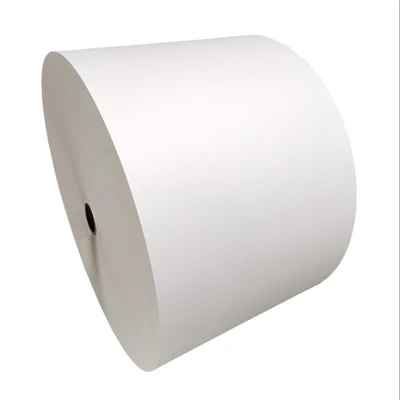
Let’s start with what opacity actually means in paper terms, because it’s not just a vague “see-throughness” label. Paper opacity is the percentage of light that doesn’t pass through a sheet, right down to the wavelength visible to the human eye. A sheet that lets 10% of light through is 90% opaque; one that lets 30% through is 70% opaque. For most commercial printing, a baseline opacity of 85% is non-negotiable—anything lower, and you’ll get show-through: the text or image printed on the reverse side bleeds through, making text hard to read and designs look unpolished.
Now, let’s break down the core difference between uncoated and coated paper, because that’s where their opacity gaps start. Uncoated paper is exactly what it sounds like: a sheet of pulp that’s been pressed and dried, with no additional layer of coating applied to its surface. Coated paper, on the other hand, has a thin, smooth layer of clay, calcium carbonate, or polymer coated onto one or both sides during manufacturing. That coating is the biggest variable when it comes to opacity.
Wait, but don’t make the mistake of thinking all coated paper is opaque, or all uncoated paper is see-through. The gap is consistent, but there’s nuance. Let’s get into the science of why this happens. Paper’s opacity depends on two main factors: light scattering and light absorption. Light travels through paper in tiny pockets between pulp fibers, air gaps, and any additives mixed into the pulp. The more those pockets and additives bend or scatter light, the less light passes through, and the higher the opacity.
Coated paper is engineered for smoother surfaces first, which means its coating is designed to fill in the tiny gaps between pulp fibers on the paper’s surface. That might sound like it would make light pass through easier, but here’s the twist: coating manufacturers add heavy, light-scattering pigments like titanium dioxide or clay to that surface layer to get that glossy finish. Those pigments are extremely good at bouncing light back out of the sheet before it can travel all the way through, which gives coated paper a huge opacity boost. On average, standard coated paper for print has an opacity range of 90% to 98%. Even thinner coated stock, like that used for magazine covers or postcards, usually clocks in at 92% or higher.
Uncoated paper doesn’t have that surface layer of concentrated light-scattering pigments, so it relies on internal factors for opacity. The main ones here are the pulp fiber itself, any fillers added during pulping, and the sheet’s thickness (or basis weight, as we call it in the industry). Let’s talk about pulp first. Uncoated paper can be made from virgin softwood fibers, hardwood fibers, or a mix, and longer softwood fibers generally create more tiny air gaps between them when the sheet is formed—gaps that scatter light. But even that only gets you so far. Most uncoated paper mills add fillers like calcium carbonate or kaolin clay to the pulp mix to boost opacity. Without those fillers, most uncoated paper would have an opacity of around 65% to 75%—way too low for any professional print job.
The average opacity of standard uncoated office paper (the stuff you use for printers and copy machines) is between 85% and 90%. That’s right at that 85% baseline I mentioned earlier, which is why it works for double-sided printing without show-through for basic text. But if you step up to heavier uncoated stocks, like the 100 lb. text stock we supply for book covers, brochures, or catalog inserts, that opacity jumps to 90% to 95%. For specialty uncoated papers, like the thick 120 lb. stock used for business cards or art prints, we can get opacity as high as 97%—almost matching many mid-weight coated papers.
Wait a minute, so is uncoated paper ever more opaque than coated paper? The short answer is almost never, but there’s one edge case: ultra-thin coated papers, like the light 70 lb. coated stock used for flyers or newspaper inserts, which can have opacity as low as 88%. That’s right in the range of mid-grade uncoated copy paper, so you might actually get less show-through with a heavier uncoated sheet than a thin coated one. That’s a detail most paper suppliers won’t tell you, but it’s one of the biggest pain points I hear from designers who thought glossy flyers would look sharper, only to realize the back of the text shows through.
But opacity isn’t the only factor that matters—because coated and uncoated paper are used for very different jobs, opacity needs to be balanced against other needs. Coated paper’s high opacity comes at the cost of breathability, for one thing. That dense clay coating traps moisture, which means ink sits on top of the surface instead of absorbing into the paper fibers. It’s also more prone to cracking if you fold it, and it doesn’t work well for applications that need to write or draw on, like planners, notebooks, or direct mail pieces that customers might want to add notes to.
As an uncoated paper supplier, I’ve seen too many businesses choose coated paper just because they think it’s higher quality, only to run into issues that don’t show up in opacity specs. Let’s take catalogs, for example. A lot of big box retailers used to print catalogs on coated gloss stock, because it makes product photos look super vibrant. But lately, more small publishers and local businesses are switching to heavy uncoated text stock for their catalogs, not just because it’s cheaper, but because its high opacity means you don’t get show-through from product descriptions printed on the back, and the matte finish feels more premium for a local brand. I recently worked with a sustainable furniture maker who switched from coated to our 100% recycled uncoated catalog stock; they cut their paper costs by 22% and got 91% opacity, so show-through was almost non-existent, and their customers loved that the paper was FSC-certified and didn’t have the plastic-like coating that some people find distracting.
Another example: educational workbooks. Teachers need workbooks where math problems on the front don’t bleed through to the back, so they want high opacity. Coated stock would work, but it’s more expensive, and kids often write on both sides, erasing, coloring, and sometimes spilling drinks. Uncoated paper’s 88% to 92% opacity is more than enough for text-heavy workbooks, and it’s more forgiving of eraser smudges and ink that bleeds through fountain pens—something no coated paper can handle well, because the ink just sits on the surface and smudges.
Now, let’s get into the common myths that circulate about uncoated paper opacity. The biggest one is: “All uncoated paper is see-through.” That’s only true for ultra-light uncoated stocks, like the 20 lb. copy paper you’d use for a single-sided memo. For anything over 70 lb. text, uncoated opacity is almost always above 90%, which is the same as most coated stocks used for brochures. Another myth: “Coated paper has higher opacity across the board.” As I mentioned earlier, thin coated stock (under 80 lb. gloss) can have opacity as low as 87%, which is lower than standard 24 lb. uncoated copy paper, which hits around 89% opacity. If you’re printing double-sided flyers on a budget, going with a slightly heavier uncoated stock will give you better opacity and a more professional look than a thin coated flyer.
What about specialty cases, like printing on both sides of a cover or a poster? For that, we recommend our 120 lb. uncoated cover stock, which has an opacity of 95%—almost identical to 100 lb. coated cover stock. The only time coated paper is clearly better for opacity is for ultra-thin, low-cost applications, like newspaper inserts, where even a small amount of show-through is noticeable, or for high-volume direct mail where you want every image to look crisp without any bleeding.
But here’s the thing that every designer and print buyer needs to know: opacity isn’t the only measure of paper quality. If you’re printing a luxury cookbook, coated paper might be the right choice for vibrant photos, even if it’s slightly lower in opacity than uncoated. If you’re printing a poetry chapbook, uncoated paper’s matte texture and high opacity will make the text feel more intimate, and it’s better for writing in margins. If you’re a small business owner on a budget, choosing uncoated paper with opacity tailored to your project can save you 15-30% on paper costs, without sacrificing the professional look you need.
As someone who’s been in the paper business for over a decade, I’ve seen companies make costly mistakes by only looking at opacity numbers on a spec sheet, not thinking about how their actual project will be used. A local restaurant came to me a few years ago, frustrated because they’d printed their menus on coated stock, only to have customers complain that the wine list on the back showed through. The coated stock they’d used was 80 lb. gloss, with an opacity of 91%—which sounded good on paper, but the thin surface coating meant that dark ink from the wine list bled through. We switched them to our 100 lb. uncoated cover stock, which had 94% opacity, and not only did show-through disappear, but customers said the matte paper felt nicer to hold, and they got 25% off their paper order. That’s the kind of real-world difference that spec sheets don’t tell you.
So, to circle back to the original question: how does the opacity of uncoated paper compare to coated paper? On average, coated paper has a slightly higher opacity, ranging from 90% to 98%, while uncoated paper ranges from 85% to 97% depending on weight and pulp additives. But that average gap is small enough that, for most professional projects, a well-chosen uncoated paper will match or even outperform a thin coated paper. The key is to match your paper’s opacity to your project’s needs, not just reach for coated paper because it’s the default.
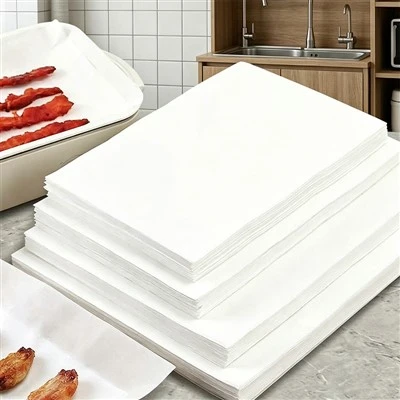
If you’re planning a print project and want to know what paper will give you the right balance of opacity, texture, and cost, I’m here to help. We carry a full range of uncoated papers, from light copy stock to heavy cover stock, all with opacity specs tailored for double-sided printing, booklets, catalogs, and more. Skip the guesswork of choosing a paper that works on a spec sheet but not in real life—reach out to us to discuss your project, and we’ll help you find the right solution that fits your budget and your needs.
Coated Paper References
- TAPPI Test Method T425: Opacity of Paper, Technical Association of the Pulp and Paper Industry, 2021.
- “Paper Opacity: Science and Applications,” Paper Science and Engineering, Vol. 38, No. 2, 2019, pp. 45-52.
- “Coated vs. Uncoated Paper: Opacity, Performance, and Use Cases,” Printing Industries of America, 2022.
- Pulp and Paper Manufacture: Properties and Testing, 3rd ed., Food and Agriculture Organization of the United Nations, 2020.
Zhejiang Xinzhongxin Paper Industry Shares Co., Ltd.
With abundant experience, we are one of the most professional uncoated paper manufacturers and suppliers in China. Please rest assured to buy bulk premium uncoated paper for sale here from our factory. If you have any enquiry about cooperation, please feel free to email us.
Address: NO.391-2, CHANGHE ROAD, CHANGAN, HAINING, ZHEJIANG
E-mail: info@xzxpaper.com
WebSite: https://www.zhongxinluhuan.com/
