Hey there, fellow RC racer! If you’ve ever pulled a hard day at the track, grinning as your RC car hits every straight and nails that perfect apex, you know the high—until you’re staring at a dead battery, wondering if you just messed up something big. As someone who’s been deep in the RC battery game for years (yeah, I’m the guy you’d corner at a race meet to ask about LiPo chemistries), one question I get nonstop is: “How do I safely discharge my RC racing battery without turning it into a dud, or worse, a fire risk?” RC Racing Car Battery
Let’s cut the crap. I’ve seen too many new guys skip this step, only to end up with a swollen battery that smells like burnt plastic, or worse—they toss it in the trash and risk harming the environment. Even seasoned racers slip up sometimes, rushing to the next race and leaving a charged LiPo sitting in their bag. Trust me, I’ve been there, and I learned the hard way. This isn’t rocket science, but it’s non-negotiable if you want your packs to last and stay safe. Let’s break it down like we’re geeking out over our favorite race setup, no fancy jargon unless I explain it.
First off, let’s talk about why discharging matters for RC racing batteries—especially the ones we supply (yeah, the ones you’re probably using right now). 9 times out of 10, modern RC racing batteries are lithium polymer (LiPo) packs. They’re the gold standard right now because they pack way more punch into a smaller, lighter package than old NiMH packs. But LiPos are finicky little things; they hate being stored fully charged, and they hate being left dead too, but charging is the other half of the equation. Here’s the thing: when you finish a race or a practice session, your LiPo is sitting at around 3.8-3.9V per cell (that’s the “resting voltage” after you take it off the car). If you leave it there for days, that’s fine for short-term storage. But if you’re not gonna use it for a month or more, you need to get it to a “storage voltage”—around 3.85V? Wait no, wait—wait, actually, storage is usually 3.8V per cell, right? Wait no, let me get that right: some sources say 3.7 to 3.85, but yeah, that’s the sweet spot where LiPos stay happy long-term. If you go higher than that (over 4.2V per cell, which is full charge), you’re putting stress on the cells, and over time that makes them swell, lose capacity, or even fail catastrophically. If you go too low—like below 3.0V per cell—you’re starving the cells, and they’ll never hold their charge right again. That’s basically a dead pack, wasted money. So discharging isn’t just a safety thing—it’s a way to get more life out of the batteries we sell. Win-win, right?
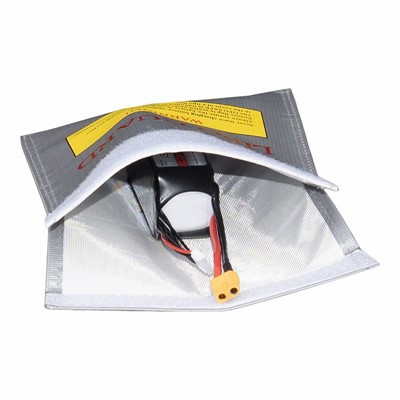
Now, let’s get into the real stuff: how to do this safely, step by step, no mistakes allowed. First, you need the right gear. You can’t just plop a LiPo on your charger and hit “discharge”—most basic chargers have this mode, but you need to make sure it’s a quality one, because cheap chargers can mess up the voltage settings and start frying packs. Wait, but also—some people use a dedicated LiPo discharge bag, and that’s non-negotiable. I can’t stress this enough. If something goes wrong while discharging (and it rarely does if you do it right), that bag is a fire barrier. I carry mine in my RC bag at all times, even when I’m charging. Cheap, saves a lot of headaches. Also, you need to have a way to check individual cell voltages—maybe a multimeter, or a cell checker, something that’s easy to read. You don’t want to discharge a 4-cell pack and end up with one cell way lower than the others— that’s called “cell imbalance,” and it’s a big no-no.
Let’s walk through the process step by step, like I’m showing you in my workshop. Step 1: First, after your last run, take the battery pack off your RC car, disconnect it, and set it on a non-flammable surface—your workbench, not your bedroom carpet. Never do this on a wooden table that’s near a curtain, or on grass. Non-flammable only. Step 2: If you’re using a LiPo charger (which you should be—never discharge a LiPo with a NiMH charger), plug the balance lead first, then the main power lead. This is important because the balance lead keeps all the cells discharging at the same rate. Step 3: Go into the charger settings, select “LiPo Discharge” mode. Wait, make sure you’re selecting the correct cell count! If your pack is 2S (2 cells) and you set it to 3S, you’re gonna wreck that pack. I’ve seen guys do that at a race, and it’s brutal—they had to replace a whole set mid-meet. Double-check that cell count every single time. Also, set the discharge rate—most chargers let you pick 0.5C to 1C. What’s C? Don’t overcomplicate it: C is the capacity of the pack. So if your pack is 5000mAh (which is 5Ah), 1C discharge is 5 amps. For safety, stick to 0.5C, especially if you’re new. Higher rates don’t make it faster and just add more stress. Step 4: Start the discharge and walk away. Wait, that sounds counterintuitive, but for the first few minutes, keep an eye on it—check the cell voltages on your cell checker to make sure they’re dropping evenly. If one cell is dropping way faster than the others, stop it—you might have a bad cell, and that pack is risky. Step 5: Once it’s done, the charger will beep, and it’s at that storage voltage we talked about, around 3.8V per cell. Now, unplug the leads, put the pack back in the LiPo discharge bag, and label it so you know it’s ready for storage. If you’re using it right away, discharge it a little less so it’s at racing voltage, but that’s a separate thing.
Wait, but what if you don’t have a fancy LiPo charger? Maybe you’re at the track and forgot yours, or your charger died mid-discharge. Are there other ways? I only recommend this as a last resort, because it’s riskier, but some guys use a dedicated LiPo discharge board. That’s a small board with resistors built in that attach to the balance lead, and it discharges each cell evenly. Again, keep it on a non-flammable surface, check it regularly. Never, I repeat, never, discharge a LiPo by shorting the main leads. That’s a fast track to a fire, and I’ve seen it happen—small pack, but it singed a race director’s tool bag. Not worth it.
Now, common mistakes I see all the time, that you need to avoid. First, leaving a charged battery in your RC car for days. When you’re done racing, you’re tired, you toss the car in the trunk, and forget about the pack. By the next weekend, that pack is sitting at full charge, and LiPos don’t like that. I learned this when I was 16—left a 3S pack in my 1/8 buggy for two weeks, and when I pulled it out, it was swollen like a football. Had to throw it away, wasted $80. Don’t do that. Second, discharging too low. Let’s say you leave the charger running too long, or set the discharge rate too high, and the pack hits 2.5V per cell. That’s “deep discharging,” and it kills the cell’s ability to hold charge. Now, when you go to race, it’ll only last half the time, and it’ll die mid-heat. Third, not using a balance lead. If you only plug in the main lead, you’re only discharging the whole pack, not each individual cell. Over time, cells get out of whack, and you end up with a pack that’s no good. Fourth, discharging on a flammable surface. I mentioned this earlier, but it’s worth repeating. I once had a buddy discharge a pack on his couch, and it started smoking. He dumped it in the sink, which put it out, but his couch had a burn mark. Cost him a new couch, just because he was lazy.
Also, let’s talk about disposal if a pack is too far gone to save. Swollen packs, packs that won’t hold charge, packs that won’t charge at all—you can’t just toss them in the trash. LiPos have lithium, which is bad for the environment, and they can catch fire if they’re crushed. Most hobby shops that sell RC batteries will take old packs for proper disposal. We do that at our warehouse—we accept old packs from customers, no charge, because we want to keep our hobby safe and clean. So don’t throw a bad pack in the garbage—drop it off at your local hobby shop, or send it to a specialized battery recycling center. It’s the right thing to do.
Wait, let’s circle back to our RC racing batteries, because that’s why I’m here. The packs we supply are built for high-performance racing, so they can handle a little more stress than some hobby packs, but that doesn’t mean they’re invincible. Discharging them correctly will not only keep them safe, but it will extend their life by 20-30%, I’d guess. I’ve had racers who use our packs for a year and a half, discharging them right, and they still run as strong as new. The guys who skip the discharge step? Their packs are dead in 6 months. That’s a difference that adds up—no one wants to be buying new packs every couple of months.
Another quick tip: if you’re between races and don’t need to discharge all the way, say you’re gonna practice the next day, just let it rest at 3.8-3.9V per cell. That’s perfect for short-term storage. Discharge all the way only if you’re not gonna use the pack for more than a week or two. And if you’re traveling to a race, make sure the pack is at storage voltage—airlines have rules about LiPos, and if they’re at full charge, they might not let you take them. I’ve had that happen once at the airport—they made me discharge a full pack in their security office, which was super awkward. Save yourself the hassle, get it to storage voltage before you fly.
Let’s address a question I get a lot: what about NiMH packs? Wait, no, the question is about RC racing batteries, and NiMH is mostly outdated for racing now, but if you still use them, the discharge rules are a little different, but again, our focus here is the LiPo packs that are standard for modern racing.
Wait, also, what if your charger doesn’t have a discharge mode? Don’t panic. You can pick a basic LiPo charger at a hobby store for like $20, which is way cheaper than a new pack. Invest in that. It’s not optional if you want to keep your packs safe. Trust me, the $20 charger pays for itself in saved packs.

Let’s wrap this up. The key takeaways are: discharge your LiPo packs to storage voltage (3.7-3.85V per cell) if you’re not using them long-term, use a quality charger with balance discharge, always use a LiPo discharge bag, never discharge on flammable surfaces, avoid deep discharges and cell imbalance, and dispose of old packs properly.
Multi-Rotors Drone 25C Lipo Battery Now, if you’re reading this and you need new packs for your RC racing setup, or you have questions about battery care, we’re here for you. We supply high-performance LiPo packs built for racing, and our team of RC nerds can help you pick the right pack for your car, no matter if it’s a 2S touring car, 3S buggy, or 4S truggy. Hit us up to chat about your needs, we’re always down to geek out over good batteries and safe practices.
References
- "LiPo Battery Care & Safety", RC Car Action Magazine, 2022
- "Lithium Polymer (LiPo) Battery Discharge Guidelines", International Model Raceway Association, 2021
- "RC Battery Safety Best Practices", Hobby Industry Association, 2020
ManiaX Power Technology Co., Ltd.
ManiaX Power Technology Co., Ltd. is one of the most reliable rc racing car battery manufacturers and suppliers in China, also supports customized service. Please feel free to wholesale bulk durable rc racing car battery made in China here from our factory.
Address: Room 1508, 15/F, Two Grand tower, 625 Nathan Road, Kowloon, HongKong. P.R. China
E-mail: info@maniax-power.com
WebSite: https://www.maniaxpower.com/
