If you’ve installed a solar panel system, you’ve probably invested in an MPPT (Maximum Power Point Tracking) controller for one simple reason: it’s designed to squeeze every last watt of power out of your panels. So when you check your system monitor and see it’s only hitting 80%, or even less, of the rated power your setup should produce, it’s frustrating. As an MPPT controller supplier who’s fielded hundreds of these questions from installers, homeowners, and small business owners over the years, I know this issue isn’t just a minor annoyance—it can cut your return on investment significantly. Let’s break down the most common, science-backed reasons your MPPT controller isn’t reaching full power, and what you can do to fix them. Mppt Controller
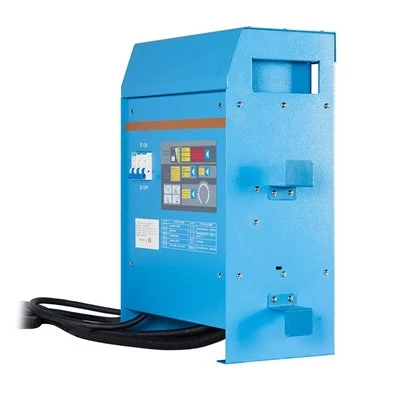
First, a quick refresher on how MPPT controllers work, because understanding the basics makes the rest make sense. MPPT controllers don’t just pass voltage from your panels to your batteries—they match the panel’s maximum power point (MPP), the sweet spot where voltage and current combine to produce the most wattage, to your battery bank’s voltage. Unlike older PWM (Pulse Width Modulation) controllers, which waste excess voltage as heat, MPPT controllers adjust their output dynamically, so their efficiency directly impacts how much power your system actually generates. A well-sized, high-quality MPPT controller can achieve 98%+ conversion efficiency, so if yours is falling short, the problem almost never lies with the controller itself being broken out of the box.
The most common culprit, and one that’s easy to overlook, is mismatched panel and controller specifications. It sounds simple, but I’ve seen installers grab a cheap MPPT controller that’s rated for a lower voltage or current than their panel array, and that’s a guaranteed way to limit power. For example, a typical residential solar panel has a maximum power voltage (Vmp) of around 38V. If you wire two of them in series, that’s 76V total Vmp. If your MPPT controller is only rated for 60V, it can’t handle the full voltage your panels produce, so it will “clamp” the output to avoid damage, capping power at a lower level. Same goes for current: if your panels have a total short-circuit current (Isc) of 10A, and your controller is only rated for 8A, it will throttle power to stay under that current limit. This isn’t a flaw in the controller—it’s a compatibility issue that happens when someone doesn’t check the controller’s maximum voltage and current ratings against their array specs. Even if you bought the controller from us, mismatched components will cause this, so always double-check before wiring.
Next, environmental conditions play a huge role, and they’re often misattributed to the controller’s performance. Solar panels don’t produce their rated power in every weather condition—their power output is based on Standard Test Conditions (STC): 1000 W/m² of irradiance, 25°C cell temperature, and air mass 1.5. That means on a hot, cloudy day, your panels will produce less than their STC rating, and your MPPT controller will follow suit. But it’s not just overcast skies: high ambient temperatures can also reduce panel output, which in turn limits the controller’s power. For example, a panel that produces 300W at 25°C might only produce 270W at 40°C, so even a perfect MPPT controller can’t reach full power if the input side is already limited. I often hear people blame the controller on overcast days, but that’s just how solar works. To confirm, check your irradiance meter (many modern controllers have a built-in one) — if it’s only hitting 700 W/m², your system will only produce 70% of its rated power, full stop.
Another big one is wiring loss, which is a silent killer of MPPT performance. When electricity travels through wires, it encounters resistance, and that resistance turns power into heat, according to Joule’s First Law: Power Loss = I²R. The thinner the wire, or the longer the distance between your panels, controller, and batteries, the higher the resistance loss. For example, if you have a 10A current running through a 16 AWG wire that’s 50 feet long, the voltage drop is around 0.8V, which translates to a power loss of 8W for every 100W of input. If your controller is already working with a lower input due to that voltage drop, it can’t reach the maximum power it’s capable of. Worse, many installers cut corners on wire gauge to save money, which only amplifies this problem. I always advise customers to use the thickest wire possible for their setup—even if it costs a little more, the power you gain is worth it. You can calculate voltage drop easily with an online calculator, but as a rule of thumb, for runs over 20 feet, step up one wire gauge, and over 50 feet, step up two.
Battery bank limitations are another common reason your MPPT controller isn’t putting out full power. MPPT controllers work by converting the panel’s voltage to match your battery’s charging voltage, but if your battery is already fully charged, or at the end of its discharge cycle, the controller will reduce output to avoid overcharging or over-discharging. For example, a lead-acid battery has a maximum charging voltage of around 14.4V for a 12V bank. Once the battery reaches that voltage, the MPPT controller will switch to absorption mode, which lowers the current to prevent damage. If you’ve been generating a lot of power and your battery is almost full, the controller will cap its output, which looks like it’s not reaching full power. Even with lithium-ion batteries, which have a flatter charge curve, once they hit their upper charge limit, the controller will throttle back. If you notice this happens every time your battery is near full, that’s normal operation—not a fault. But if it happens when the battery is partially charged, you might need to check your battery’s health, as a sulfated lead-acid battery, or a degraded lithium pack, will have a lower charge voltage limit, limiting the controller’s output.
Dirty or shaded panels are also a frequent cause of reduced MPPT power, and they trick a lot of people into thinking their controller is broken. Even a small amount of shade on one panel in a string can drop the entire array’s output significantly, and the MPPT controller will only track the MPP of the weakest panel, not the whole array. For example, if you have four panels in series, and one is shaded 20%, the array’s total power will drop by more than 20%, because the shaded panel acts like a bottleneck. Dirt, bird droppings, or mold on panels have the same effect—even a thin layer of grime can reduce irradiance reaching the cells, lowering output. I had a customer last year who complained his MPPT controller was only hitting 50% power, and after we asked him to check his panels, he found a layer of leaves covering two of his four panels. After cleaning them, his power jumped back to full. Regular panel cleaning and trimming tree branches that shade your array are simple fixes that often solve this issue.
Less commonly, it could be an issue with the controller’s settings, especially if you’re using a newer model with adjustable parameters. Some MPPT controllers let you set battery type, charge voltage, or current limits, and if those settings are misconfigured, they can limit output. For example, if you set your battery type to “flooded lead-acid” instead of the correct one for your lithium battery, the controller might use a lower charge voltage, reducing its maximum output. Or, if you accidentally set a charge current limit that’s lower than your panel’s total current, the controller will throttle to that limit. Most modern controllers have a default setup that works for common systems, but it’s worth checking the user manual to confirm your settings match your components. If you’re using our controllers, our support team can walk you through verifying these settings in 5 minutes.
Now, let’s talk about how to troubleshoot these issues step by step, so you can pinpoint the problem yourself. Start with the basics: check your irradiance and panel output with a multimeter. Measure Vmp and Imp at your panels in direct sunlight, and compare that to the controller’s input readings. If your panel’s input is lower than its rated Vmp and Imp, the problem is on the panel side—shade, dirt, or temperature. If the panel readings are correct, check your wiring for voltage drop: measure voltage at the panel end and the controller end, and if there’s more than a 2% drop, your wire is too thin or too long. Next, check your battery bank: if it’s fully charged, the low power is normal, but if it’s partially charged, test the battery’s voltage and capacity to see if it’s degraded. Finally, double-check your controller’s specs against your array to make sure you didn’t mismatch voltage or current.
If you’ve tried all these steps and your MPPT controller is still not reaching full power, it might be a fault with the controller, but that’s rare. As a supplier, we test every controller before it leaves our warehouse, but if you suspect a defect, our team can help you run diagnostic tests, or offer a replacement if needed. The key takeaway here is that MPPT controller performance is tied to the entire system, not just the controller itself. A high-quality controller is only as good as the panels, wiring, and batteries it’s paired with.
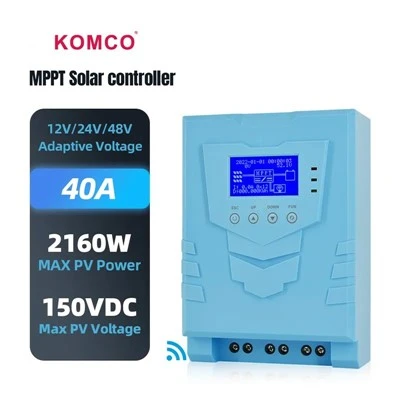
At the end of the day, getting full power from your MPPT controller is about matching components, maintaining your system, and understanding how environmental and electrical factors impact performance. If you’re planning an upgrade, troubleshooting a persistent issue, or just want to make sure your system is running at peak efficiency, feel free to reach out to our team for a consultation. We work with installers and homeowners of all sizes to find the right MPPT controller for their setup, and we’re happy to answer any questions you have about your system’s performance.
Lithium Battery Charger References
- "Solar Photovoltaic System Design and Installation" (IRENA, 2021)
- "Maximum Power Point Tracking for Solar Applications" (Journal of Power Sources, 2019)
- "Wire Size and Voltage Drop Calculations for Renewable Energy Systems" (National Renewable Energy Laboratory, 2020)
- "Battery Charge Control for Solar MPPT Controllers" (IEEE Transactions on Sustainable Energy, 2018)
Huizhou Qiangfeng Power Technology Co., Ltd.
Huizhou Qiangfeng Power Technology Co., Ltd. is one of the most professional mppt controller manufacturers and suppliers in China, featured by quality products and good service. We warmly welcome you to buy customized mppt controller made in China here from our factory. If you have any enquiry about quotation and free sample, please feel free to email us.
Address: No. 28, Hu’ao Avenue, Shiwan Town, Boluo County, Huizhou City, Guangdong Province
E-mail: Komco@Jinlidianqi.cn
WebSite: https://www.autobatterychargers.com/
