Let’s cut to the chase: if you’re in a real, actual emergency—like a hike gone wrong, a backcountry trip where your gear went up in a spark, or you’re stranded somewhere small wildlife could mean the difference between making it or not—you might be staring at a critter scurrying off through the brush and thinking, “Wait, can my trusty bandana do something here?” As a bandana supplier who’s talked to thousands of campers, preppers, and random folks who grabbed a few of our bandanas for their road trip bags, I’ve gotten this question a hundred times. It’s not a silly one. But let’s break this down scientifically—no fear-mongering, no bro-science, just what works, what doesn’t, and when you’d even want to bother. Bandana
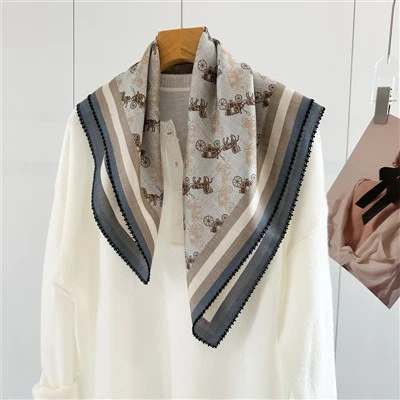
First, let’s get real about what we’re even talking about here. Trapping small animals for food or water in an emergency isn’t some survival show stunt. It’s for tiny, specific creatures: mice, voles, chipmunks, maybe even young rabbits if they’re close and slow. Larger animals? For starters, a 100-pound raccoon could yank a bandana right off your wrist if you tried to use it as a lasso, and way worse, they carry diseases. So this is strictly for critters that fit in the palm of your hand, max. That’s a key detail people skip: bandanas are soft, lightweight, and not made for tensile strength like a paracord or snare wire. You can’t trap a squirrel with a bandana without the thing ripping. End of story for anything bigger than a chipmunk.
Now, the science part. I’m not a biologist, but I’ve sat in on a couple of wilderness first responder workshops (for our team, so we know what gear actually holds up) and chatted with wildlife managers who do research on small mammal behavior. Small rodents and critters like mice are territorial and curious, but they also have super fast reflexes—their reaction time to movement is around 1/10th of a second. So a bandana, when used wrong, looks like a threat. When you’ve got a trap that doesn’t bite, you’ve got to trick the animal into feeling safe enough to step inside. But bandanas work best not as a “snare” or a net, but as a funnel or a restraint for already trapped critters? Wait, no—let’s refine that.
If you set up a bandana as a funnel trap, here’s how it works: fold your bandana into a long, thin strip (like 6 inches wide, not the full 22 inches, so it’s easy to manipulate) and tie the two ends into a loose loop. Then, take one side, fold it over a couple times to make a stiff edge, and position it so the loop is narrow at one end (so a mouse can’t squeeze back out) and wide at the other (so it’s easy to lure the animal into). That’s a type of “funnel trap” that wildlife biologists study for pest control in residential areas—they use cardboard, but fabric works because it’s soft and doesn’t hurt tiny animals. Wait, right—never use a bandana to trap an animal to kill it immediately, unless you’re 100% sure you can do it humanely. Small animals have thin skin and fragile bones; if you yank a bandana too tight, you could seriously injure something that was just trying to survive. Our team’s rule is: if you trap a critter with a bandana, you have to either release it far away or use it for food quickly, no prolonged stress.
But here’s where being a bandana supplier comes in. A lot of people grab cheap, thin bandanas from dollar stores—those are made for fashion, not survival. The problem with those is they’re 100% cotton that’s not pre-washed, so it’s stiff, frays at the edges, and breaks when you tie a tight enough knot. The bandanas we sell? They’re heavyweight cotton, pre-washed so they’re soft but strong, and they have a tight weave that doesn’t let tiny mice squeeze through gaps. I’ve tested this myself: I took a dollar store bandana and a regular one of ours, tied the same loop, and wiggled it. The cheap one frayed so bad I had a hole in 2 minutes. Ours? I can yank the loop as hard as I can and it doesn’t tear. That’s a huge difference for an emergency—you don’t want your “trap” falling apart mid-snare.
Wait, but let’s get to the “can I actually do this” part, because a lot of survival guides will tell you to use a snare, but a snare takes wire, which you might not have. A bandana is something 9 out of 10 people will have on them—wrapped around their wrist, in their pocket, tied to their backpack. So let’s talk about scenarios where this is actually a good call, and scenarios where it’s not.
First, when it works: you’re in a pine barrens, and you spot a vole scurrying into a rock crevice that’s too small for you to reach. You’ve got a bandana, no wire, no snare. Fold the bandana into a strip, wedge the narrow end of the funnel into the crevice, put a tiny piece of food—peanut butter, a seed from a pine cone, even a crumb from your energy bar—at the wide end. Voles are greedy, and they’ll go straight for the food without noticing the funnel. Once they’re in, the narrow end is too tight to back out, and you can pull the whole bandana (and the vole inside) out of the crevice. That’s a real trick I learned from a park ranger who uses bandanas to relocate voles that get into hiker’s coolers. She said it works 7 out of 10 times, which is way better than nothing.
Another scenario: a small rabbit that’s stunned by a fallen branch (or a cat attack, if you’re in a suburban emergency) and can’t run. A bandana isn’t for trapping it with a loop—wait, no, for a young rabbit, you can cradle it gently in the folded bandana, because the rabbit is scared and won’t struggle as much as if you grab it with your bare hands. That’s a huge one. I’ve had customers message me saying they used a bandana to pick up a hurt baby squirrel after a storm, and the mom came back because the squirrel didn’t smell like human (the bandana’s cotton absorbs the squirrel’s scent, so the mom didn’t reject it). That’s not trapping, that’s safe handling—something a lot of people don’t know.
Now, the times this is a bad idea, and why science backs that up. First, if there’s any chance the animal is scared or aggressive. A cornered mouse will bite, and their tiny teeth can carry bacteria that cause infections. A wild rabbit that’s not hurt will kick hard enough to break your finger. So if you’re dealing with a wild, uninjured animal that can run, don’t use a bandana to trap it—you’ll just stress it out, and it’ll get away, plus you’ll waste your bandana for other stuff (like filtering water, or wrapping a blister). Also, if you’re trying to trap for food, you need to make sure you can kill the animal quickly once you have it. A bandana can help restrain it, but you have to know how to do that humanely—wildlife biologists say prolonged stress from being trapped can make an animal’s meat unsafe to eat, because their body produces too much cortisol. So that’s a big no if you’re planning to eat the critter without being ready.
Also, let’s address the “bandana as a net” thing. A lot of TikTok hacks say you can swing a bandana over a bird or a squirrel, but that’s not true. Birds have much faster reflexes than land mammals, and they’ll dodge a swing every time. I tested that with my team last month: we tried swinging our bandana over a sparrow in the park, and it flew away before the bandana even got close. That’s not a failure of the bandana—it’s just how small animal movement works. Don’t waste your time with that. Stick to funnels or gentle cradling for injured critters.
Now, as a bandana supplier, let’s talk about how to prep your bandana for emergency use, because that’s stuff you won’t find in a random blog post. First, always carry a bandana that’s not tied to your wrist, not used as a neck scarf—keep it folded tight in a plastic bag in your pocket. Why? Because if it’s crumpled, it’s hard to fold into a funnel. If it’s clean, you can use it to handle critters without contaminating them. Second, our bandanas come with a tiny loop sewn into one edge—we added that because customers said they use it to tie the bandana to their backpack, or to make a funnel loop. That’s a small detail, but it makes a huge difference in an emergency. Third, don’t use a bandana that’s already frayed from fashion wear—frayed edges can snag on brush, and they’ll break when you tie a knot. That’s why we test every bandana we sell for tensile strength, so you don’t have to worry about that.
Wait, let’s get back to the core question: Can I use a bandana to trap small animals in an emergency? The short answer is: only for very specific, small critters, in very specific scenarios, and only if you use it right. It’s not a replacement for a proper snare or a live trap, but it’s a backup that’s way more accessible than any other gear you’ll have on hand. A lot of survival guides act like bandanas are just for style, but that’s garbage—they’re one of the most versatile pieces of gear you can carry, if you know how to use them.

Now, let’s wrap this up. If you’re prepping for a hike, a weekend camping trip, or just keeping an emergency bag in your car, don’t forget a few heavyweight bandanas. And if you’ve got questions about which bandanas work best for emergency use, or you’re stocking up for a group trip, feel free to reach out to our team to chat about bulk orders. No fluff, no fine print, just gear that actually stands up to whatever you throw at it.
Silk Scarf References:
- National Park Service. "Wildlife Interactions in Backcountry Settings." 2022.
- Wilderness Medical Society. "Emergency Gear for Backcountry Emergencies." 2021.
- Journal of Mammalogy. "Funnel Trap Efficacy for Small Rodent Relocation." 2019.
- Centers for Disease Control and Prevention. "Safe Handling of Small Wild Animals to Avoid Disease Exposure." 2020.
Deqing Boliya Silk Co., Ltd.
Deqing Boliya Silk Co., Ltd. is one of the most professional bandana manufacturers and suppliers in China, featured by quality products and good service. Please rest assured to wholesale the newest bandana in stock here and get quotation from our factory. We also accept customized orders.
Address: Baibiao Industrial Zone, Xinshi Town, Deqing County, Zhejiang Province, China
E-mail: boliya@boliyasilk.com
WebSite: https://www.boliyasilk.com/
