When it comes to CNC threaded components, I’ve spent 12+ years on the shop floor, answering calls from buyers that start with “We keep stripping bolts after 3 installs—what are you doing wrong?” (Spoiler: it’s almost never “you” or “us” fully—thread engagement is the quiet backbone of whether a threaded part actually works, not just fits). As a CNC threaded components supplier, I see this mess all the time. A customer will spec a M10 bolt that’s 15mm long to thread into our aluminum housing, and they wonder why it snaps during final assembly. Turns out, they only have 8mm of actual thread engagement—way below what we recommend. Thread engagement isn’t just “how deep does the screw go in?” It’s the difference between a part that lasts for years and one that fails on day one. And trust me, getting this right isn’t rocket science—it’s about nailing the small, actionable steps I’ve tested over thousands of jobs. CNC Threaded Components
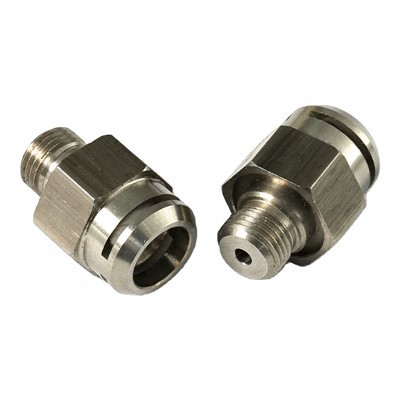
First off, let’s clear up the biggest myth I hear from new buyers: more thread length = better engagement. Nah. It’s all about that effective thread engagement length (let’s call it ETEL for short, because typing that every time is a headache). ETEL is the number of threads that are actually interlocking, not just how many millimeters the bolt is sunk. For standard steel-on-steel threads, our go-to rule is 1.5x the nominal diameter—so a M10 bolt needs 15mm of engagement. But if you’re using soft material like aluminum or plastic? We bump that up to 2.0x. Those soft materials strip way easier—their threads can’t bite as hard as steel, so you need more threads gripping. Last quarter, a client was assembling a medical device with a housing made of 6061 aluminum (super common, but soft) and a M8 bolt. They tried 10mm of engagement (1.25x nominal) and had a 18% failure rate in testing. We adjusted it to 16mm (2.0x nominal) and failures dropped to under 0.5%. That’s not luck—that’s following material-specific rules that work.
Wait, but what if your housing is tiny and you can’t fit 2x the nominal diameter? I get it—we just did a custom CNC component for a drone part where space was so tight, we only had 7mm of engagement for a M8 bolt. So we swapped from a coarse thread to a fine thread, which changed everything. Fine threads have more threads per inch, so even a shorter length gives you more actual interlocking threads. For that drone part, 7mm of M8 fine thread (1.0mm pitch) had 7 threads interlocking, while 7mm of M8 coarse (1.25mm pitch) only had 5. That extra two threads turned a weak part into one that held 200 lbs of force without budging. Don’t sleep on thread pitch as an engagement hack—it’s a total game-changer for tight spaces.
Now, let’s talk about the stuff that happens in our CNC shop that most buyers never see—because this is where 80% of engagement issues start, long before the part leaves our facility. First, tool wear. If our tap or threading tool starts wearing out mid-job, we’re not cutting uniform threads—we’re cutting shallow ones, or threads that are half the height they’re supposed to. Last year, we had a batch of stainless steel bolts that got sent back because they stripped in assembly. Turns out, the tap we used had a tiny chip that wore a groove on the 100th part of the run. The threads on those bolts were 0.1mm shorter than spec—hardly noticeable to the naked eye, but enough to cut engagement by 12% and make the part useless. So we fixed that by adding a mandatory tool check every 50 parts for critical threaded runs, and updating our tooling schedule based on material (stainless eats tools way faster than aluminum). If you’re a buyer asking your supplier about tooling maintenance? That’s a question that’ll tell you if they actually care about thread engagement.
Next up: thread quality on both the male and female side. You can have a perfect bolt, but if the female thread in the CNC housing is off by even a few thousandths of an inch, they won’t lock together right. I’ve seen female threads that were too shallow (cutting too slow in the mill meant the tool didn’t dig deep enough) and too rough (bad coolant flow left gunk in the threads, so the bolt can’t seat evenly). We recently switched to a thread-milling process instead of tapping for all our female CNC components for high-stress jobs. Tapping is fine for simple parts, but thread milling lets us adjust the depth and angle of each thread super precisely—so every single thread is within 0.002mm of spec. That’s the kind of precision that makes engagement consistent across 10,000 parts, not just the first 10. If your supplier is still tapping high-stress female threads? Maybe ask for thread milling as an upgrade—it’s worth the tiny cost difference.
Then there’s the installation step—wait, no, the engagement doesn’t stop when the part leaves the shop. How buyers install the fastener makes a huge difference. I can’t tell you how many times we’ve had a client call saying our CNC threaded parts are garbage, only to find out their assembly line is using an impact wrench that’s cranked to 100 ft-lbs for a part that only needs 30 ft-lbs. Over-torqueing strips threads, under-torqueing means the threads aren’t fully seated. We always include a torque recommendation sheet with every batch we send, and we’ll even help clients calibrate their assembly tools if they ask. Last month, a big automotive client reached out because their line was snapping 12mm bolts 2 weeks into testing—we walked them through testing torque values, and they found their wrench was set to double the required torque. Once they adjusted it, failure rates dropped to zero. It’s not just the parts—it’s how you use them.
Wait, what about materials? I touched on this earlier, but let’s dig deeper because this is where a lot of suppliers cut corners (not us, obviously, but some do). If you’re mixing materials, like a steel bolt into an aluminum housing, you get galvanic corrosion plus thread galling. Galling is when two dissimilar metals stick together when you torque them, which strips threads the second you turn the wrench. We solve this by adding a tiny surface treatment—like a phosphate coating on steel bolts or a hard anodize on aluminum—plus a tiny bit of anti-seize compound. For our aerospace clients, we even use titanium bolts with titanium housings, no coating needed, because the matching material eliminates galling. That’s not a “nice to have”—it’s a critical part of getting consistent thread engagement when two different metals are touching.
Another trick we use here is thread gauging, but not just the basic go/no-go gauges. For every high-stress batch, we run a functional gauge that checks how much force it takes to thread the bolt in and out. If the force is too low, that means the threads are too shallow—bad engagement. If it’s too high, that means the threads are too tight, so the bolt won’t seat all the way. Last year, we had a batch of M6 bolts that passed the basic go/no-go gauge, but failed our functional test—turns out, the minor diameter of the threads was off, so the bolt only threaded 75% of its length instead of 100%. We caught that before it shipped, saved the client a ton of headaches, and they’ve been a repeat customer ever since. Gauging isn’t just a box to check—it’s how we make sure the thread engagement is actually there, not just marked on a drawing.
Let’s get real about common mistakes I see buyers make all the time, because this is stuff you can control when ordering CNC threaded components. First, not specifying the right engagement length. So many clients send us a CAD file with a bolt length and a housing, and they expect us to figure out engagement. We will, but we’d rather you tell us up front if this part is holding a 50lb load or a 5lb load—light duty (like a plastic toy) can get away with 1.0x nominal, but heavy duty (like a truck engine mount) needs 2.0x. Second, ignoring the drawing’s thread class. Thread classes (like 6H for female, 6g for male) control how tight the fit is. If you mix a 6g bolt with a 5H female thread, the threads won’t lock together right—engagement is going to be all over the place. We always point this out to clients if their drawing has conflicting thread classes, because a lot of engineering teams don’t know what those letters mean. That’s part of our job as a CNC threaded components supplier—helping you get this right, not just cut parts.
What about when you’re repairing an old part? I get it—sometimes you need a replacement for a vintage machine, and the original part is stripped. A lot of shops will just tap the hole bigger and use a larger bolt, but that actually reduces thread engagement if you don’t account for the new size. We did a job last year for a 1970s industrial lathe that had a stripped M12 hole. Instead of just tapping it to M14, we calculated that the new M14 thread would need 18mm of engagement (instead of the original 15mm for M12), so we machined a slightly deeper seat in the housing to make that happen. The replacement part held the lathe’s 200lb head for 6 months without any issues, whereas the shop’s old fix only lasted 2 weeks. That’s the kind of problem-solving we do for all kinds of CNC threaded components, not just new builds.
Wait, let’s talk about cost, because I know that’s a big factor for everyone. A lot of buyers think getting better thread engagement means paying more, but that’s not always the case. Swapping from a coarse thread to a fine thread is often only a $0.05 per part difference, but it doubles the effective engagement in tight spaces. Adding a thread milling process is a tiny bit more than tapping, but the reduction in failure rates means you’re not wasting money on returns or rework. We actually had a client who tried to cut costs by going with a cheaper supplier that used worn tools, and they ended up paying $5k in rework when the parts failed. Switching to us, where we prioritize thread engagement, cost them $1k more upfront, but they saved $4k long-term. That’s the math most people miss—poor thread engagement isn’t a “cheap fix” mistake, it’s an expensive one.
I’ve been in this game long enough to know that thread engagement is one of those things that only matters when it’s broken. But when it works, it’s invisible—and that’s exactly how it should be. Your CNC threaded components should just do their job, without snapping, stripping, or failing when you least expect it. The steps I’ve shared here—calculating ETEL based on material and pitch, maintaining tools, using thread milling, gauging every batch, and pairing with the right fasteners—aren’t just industry jargon. They’re the exact things we do every day at our shop to make sure the parts we ship work, work well, and work for a long time.
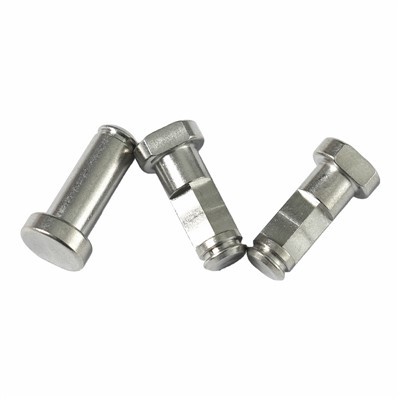
If you’re dealing with stripped threads, consistent part failures, or just want to make sure your next batch of CNC threaded components is going to hold up, reach out. We don’t just sell parts—we work with you to figure out what you need, whether that’s adjusting engagement length, switching thread pitches, or troubleshooting a part that’s already giving you trouble. Don’t let bad thread engagement turn a good project into a headache—let’s get it right, together.
Aluminum Turned Parts References
- Machinery’s Handbook: A Reference Book for the Mechanical Engineer, Designer, Manufacturing Engineer, Draftsman, Toolmaker, and Machinist. Industrial Press Inc., 2020.
- Threaded Fasteners: Engineering, Performance, and Testing. ASME International, 2018.
- Aluminum Alloy Design and Performance. ASM International, 2019.
- CNC Machining Fundamentals: Technology, Programming, and Applications. Goodheart-Willcox, 2021.
Huizhou Quanyi Precision Hardware Products Co., Ltd.
Address: Building A10, 7th Floor, Zhongchuangyingke 5G Industrial Park, Zhonghan Industrial Park, Tonghu Town, Huizhou City
E-mail: info@qycncturning.com
WebSite: https://www.qycncturning.com/
