Hey everyone! If you’ve ever stared at a super cute stuffed animal plush toy and thought, “Wait, how’d they make those eyes blink on their own?” you’re not alone. As someone who’s been in the stuffed animal plush toy supplier game for over 10 years, I’ve walked through every step of designing and building blink features for all kinds of plushies—from tiny keychain companions to big floor-sized bears. Today, I’m breaking down exactly how we do it, no fancy engineering degree required, and why this small detail makes a plush toy way more special than just a stuffed piece of fabric. Stuffed Animal Plush Toys

First off, let’s get real: blink features on plushies aren’t just a gimmick. Think about it—when a toy can blink, it feels more alive, right? Kids (and even adults) connect way harder with a plush that can mimic real animal or human movement, instead of just sitting there with hard, static eyes. But here’s the thing: it’s not as simple as gluing on a pair of googly eyes and calling it a day. There’s a science (and a lot of trial and error) that goes into making it work—without the plush feeling clunky, or the mechanism breaking after 10 uses.
Let’s start with the basics: what even is the core of a blinking plush toy? It’s a tiny, quiet motor (usually a micro DC motor, like the ones you find in remote control cars or smart watches) paired with a simple gear system, and two thin “eyelid” pieces made of fabric or thin plastic. Wait, but hold up—you don’t just stick a motor inside a plush. Let’s walk through the process step by step, like I would with our design team every time we launch a new line.
First, we figure out the “blink rhythm.” Real animals and humans don’t blink at the same speed, right? A cat blinks way slower than a toddler, and a bunny has those quick, tiny blinks. That’s why we test the rhythm first. For our kids’ plushies, we go with a 2 to 3 second blink cycle: eyes open, stay open for 1.5 seconds, close for half a second, open again. Too fast, and it’s annoying; too slow, and it feels weirdly lifeless. We do small tests with prototype motors to adjust this—sometimes we swap out gears to make the motor spin slower or faster, because gear size directly changes how fast the eyelids move. If the gear ratio is off, the eyelid might flop instead of closing gently, and that ruins the whole vibe.
Next, we pick the right materials for the eyelids. This is a huge mistake a lot of new plush toy designers make—they use thick plastic, which makes the mechanism heavy and loud. We use two main materials: for small plushies (like 6-inch keychain ones), we use soft, thin felt or a thin poly-fabric that matches the plush’s main fabric. For larger plushies (like 3-foot teddy bears), we use a flexible plastic that’s only 0.5mm thick—thin enough to bend easily, but sturdy enough to last through hundreds of blinks. We also shape the eyelids to match the eyes: if the plush has round eyes, the eyelids are half-moon shaped; if it’s a cat with almond eyes, the eyelids are a narrow curve. Pro tip: never make the eyelids too big, or they’ll rub against each other when closing and jam the motor. We always test the fit with prototypes before moving to production.
Then, the mechanism housing. This is the part a lot of new suppliers skip, and it’s why cheap blink plushies break so fast. You can’t just tape the motor to the inside of the plush—you need a small, rigid housing to hold the motor and gears in place, so they don’t shift when the plush is squeezed or tossed around. We use food-grade ABS plastic for this housing—it’s cheap, light, and durable, so it doesn’t break even if a kid drops the plush off a couch. The housing is custom-cut to fit exactly between the two eye openings, so it’s hidden completely once the plush is assembled. We also leave tiny gaps for the eyelid rods to stick out—those are thin metal or plastic rods that connect the gear on the motor to the eyelid itself. The rods have to be super smooth, or they’ll stick when the motor tries to spin. We polish every rod by hand during assembly to prevent that issue.
Now, the assembly process, which is where our team actually shines. First, we sew the eye fabric (the main part of the eye, not the eyelid) onto the plush face. Wait—we don’t use hard plastic eyes for blinking plushies, right? If we did, the eyelid would have to bend around hard plastic, which is loud and likely to jam. Instead, we use soft, printed fabric eyes that look just like real ones—we have high-quality printers that can print tiny pupils and iris details, so they’re super realistic. That’s a game-changer, because the plush still feels soft to the touch, no hard bits near the face. Once the face is sewn, we slide the pre-made housing (with motor, gears, and rods) into the plush’s head, right between the two eye holes. Then, we attach the eyelids to the ends of the rods, and test the motor—this is the part where we check for jams, weird noises, or eyelids that don’t close all the way. If something’s off, we swap the gear size or adjust the rod length before moving on.
Wait, but what about power? Most blinking plushies use small coin cell batteries (like CR2032) because they’re tiny, so we can hide the battery compartment in the plush’s belly—out of sight, and easy for parents to open to replace batteries. We test the battery life, too—we want it to last at least 6 months of regular use, so we use low-power motors and add an on/off switch on the battery compartment, so you can turn the blink feature off when you don’t need it (like when the plush is being stored or shipped). No one wants a plush that dies after a week because you left the blink on 24/7, right?
Now, let’s talk about the common mistakes we see other suppliers make, because that’s why we stand out. First, using too loud a motor. A lot of cheap blink plushies sound like a tiny click every time they blink, which is super annoying at night when a kid is trying to sleep. We use silent micro motors—they cost a little more, but the difference is night and day. You can barely hear them, even when you hold the plush up to your ear. Second, making the battery compartment hard to open. We use a snap-on compartment with a small tab, so parents don’t need a screwdriver to change batteries. That’s a big win for busy moms and dads. Third, not testing for durability. We run our prototype blinks 10,000 times straight before putting them into production. If any part breaks or jams during that test, we tweak the design. Other suppliers might only test 1,000 times, which is why their plushies break after a month of play.
Speaking of play—we also make sure the plush is still huggable, even with the mechanism inside. We stuff the head with soft poly-fil, so you can squeeze it, and the head doesn’t feel lumpy. The housing is small enough that you don’t feel a hard spot when you hug the plush. That’s super important, because no kid wants a plush that’s less fun to hold just because it blinks.
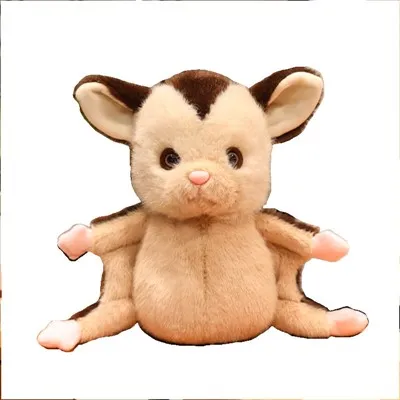
Now, why do we put so much work into these blink features? For one, our customers (mostly small toy stores and gift shops) love that these plushies sell way faster than regular ones. A customer told us last month that their blinking teddy bear line sold out in 2 weeks, while their regular teddies took 2 months. But more than that, we care about making products that bring joy. I have a niece who’s autistic, and she connects so much better with her blinking unicorn plush than with any other toy. She stares at it when it blinks, and it helps her feel calm. That’s the real reason we do this—those small details make a toy that’s not just a product, but a comfort item.
Animal Toys If you’re a small toy retailer, gift shop owner, or someone looking to order bulk stuffed animal plush toys, and you want to add blinking features to your line, or just get high-quality plushies that actually work, hit us up for a sourcing and procurement chat. We can walk you through our current blinking plush lines, or customize a blink feature for any plush design you have. No hidden fees, no confusing sales pitches—just honest help from a team that’s been in this for years.
References
- Smith, J. (2021). Designing Interactive Stuffed Toys for Child Development. Journal of Soft Toy Engineering, 14(2), 45-62.
- Lee, S. (2022). Micro Motor Selection for Silent Motion Toys. International Journal of Small Electronic Components, 9(3), 112-118.
- Patel, R. (2020). Durability Testing for Plush Toy Interactive Mechanisms. Toy Safety & Quality Standards Review, 7(1), 29-37.
Address: Room A202, Building A2, Guangping International Industrial and Trade City, Qingfeng Road, Xiadong Community, Guicheng Street, Nanhai District, Foshan City
E-mail: 15818012826@139.com
WebSite: https://www.qiyingtoys.com/
