Hey everyone, let’s cut to the chase: if you’re an automotive engineer, product manager, or even a small shop owner looking for prototype parts, you’ve probably Googled “vacuum casting services for automotive parts” at some point. I’m on the front lines of providing these services every single day, so let me break this down like I would to a regular client who just walked into my workshop. Vacuum Casting Services

First off, what even is vacuum casting, for anyone who’s new here? It’s that low-volume production method where we pour liquid polyurethane into a silicone mold we make from a 3D-printed or CNC-machined master part. We pull all the air out of the chamber so the resin fills every tiny nook and cranny, right down to the fine details like a car’s logo on a steering wheel or the grooves on a brake component. I know some folks mix it up with injection molding, so let’s get that straight: injection molding is for mass production (10k+ parts), vacuum casting is for the in-between—think 10 to 100 parts, sometimes up to 200 if you keep the mold nice.
Now, the big question: is this actually useful for automotive parts? The short answer is YES, but it’s not for every part. Let’s talk about where it shines, because that’s what I get asked most. Prototypes, for starters. When a car manufacturer is testing a new dashboard trim, they don’t want to drop $50k on an injection mold just to tweak the design a dozen times. They send us a master 3D file, we knock out 50 vacuum-cast trims in a week or two, and they can test fit them in actual vehicles, check how the plastic holds up to UV light, or see if the buttons feel right to a driver’s finger. I had a client last quarter who was working on a new electric vehicle’s door handle—they needed to test the ergonomics before committing to tooling, and vacuum casting was way faster and cheaper than any other method.
But wait, what about parts that need to hold up under heat or pressure? Automotive parts have to survive way more than your average consumer goods, right? Things like engine bay components, brake system parts, or undercarriage pieces. The good news is, we can use different grades of polyurethane for that. Standard resin is great for non-structural parts like trim or interior panels, but we have high-temperature resins that can handle up to 120°C (that’s the temp inside a running engine bay) and even structural resins with impact resistance similar to ABS or polypropylene. Last year, a small custom car shop came to us needing 20 intake manifold prototypes for a vintage Corvette restomod. They tried injection molding, but the minimum order was 500, which was way more than they needed for their small production run. We made their master from a 3D-printed model, cast the manifolds with a high-strength resin, and they tested them and worked perfectly—no leaks, no warping, exactly what they needed.
Another area where vacuum crushes it: custom low-volume automotive builds. Think hot rods, restomods, or specialty electric vehicles where you don’t need 10,000 of the same part. A buddy of mine builds custom motorcycle parts, and he uses our vacuum casting service for fuel tanks, fairings, and even the small brackets that hold the lights. If he tried to make these parts with injection molding, he’d have to spend months waiting for tooling and drop a ton of cash upfront. With us, he sends his design, we make the silicone mold in 3 days, cast the parts in a week, and he’s ready to start assembling his bikes. That’s the kind of speed and flexibility that big automakers care about too, when they’re testing new model lines that might only produce 500 units a year.
But let’s be real, it’s not all sunshine and smooth resin. There are limits, and I don’t sugarcoat that with clients. For one, you can’t make large structural parts like chassis rails with vacuum casting—those need steel or aluminum and proper manufacturing processes. The molds themselves only last so long; a good silicone mold might give you 20-25 parts before it starts to wear, so if you need 500 parts, vacuum isn’t the way to go. Also, if you need a part with exact, consistent tolerance (like a brake piston that has to fit within 0.1mm), vacuum casting can get you close, but it’s not as precise as CNC machining or injection molding. I always tell clients: if you’re not sure, send us your design files, and we’ll tell you if vacuum is a fit, no pressure.
Wait, let’s also talk about post-processing, because that’s a huge part of automotive parts. If you want a part that looks like it came straight out of a production line, we can do all the finishing work right here at our shop. Sanding, painting, powder coating, even adding that soft-touch texture to a steering wheel—we’ve got a guy on staff who’s been doing automotive finishes for 15 years, and he can make a vacuum-cast part look identical to an injection-molded one. I had a client who was working on a custom center console for a Tesla, and he wanted the same matte black finish as the factory parts. We cast the console, sanded it smooth, shot it with the right automotive-grade paint, and he couldn’t tell the difference until I pointed out it was a prototype. That’s the kind of attention to detail that matters for automotive.
Oh, and let’s not overlook tooling lead times. If you’re launching a new automotive part and you’re on a tight deadline, vacuum casting is way faster than any other low-volume method. We can have a master part (3D printed or CNC milled) done in 2-3 days, make the silicone mold in another 2 days, and start casting parts immediately. By the time you’d get a quote back from an injection mold shop, we could have your first 10 parts in your hand. Last month, a race team came to us with a broken air intake part they needed for a track event in 2 weeks. We scanned their broken part, cleaned up the 3D model, made a mold, and had 10 identical cast parts ready in 10 days. They used them at the track, no issues, and saved themselves from missing a big race. That’s the kind of practical use case people don’t always think about.
Now, I know some folks out there might say, “Why not just 3D print the parts instead?” 3D printing is great, but for functional parts, it can have layer lines that make it less durable, and the material properties aren’t as consistent as cast polyurethane. A vacuum-cast part is solid, uniform, no layer lines, and you can get the exact material characteristics you need for automotive use—whether that’s UV resistance for exterior trim, chemical resistance for under-hood parts, or impact resistance for interior components. I’ve seen too many clients try to 3D print a brake bracket prototype, only to have it snap during a test, then switch to vacuum casting and have it hold up perfectly.
So, when is vacuum casting NOT the way to go? Let’s be clear: if you need over 200 parts, you’re better off with injection molding, it’s more cost-effective for higher volumes. If you need very large parts (like a full car body panel over 1m long), the silicone mold might not hold up to the pressure of the resin, and you’d have issues with part consistency. Also, if you need parts with complex internal geometries that can’t be removed from a silicone mold (like a part with an internal thread that’s undercut), vacuum casting might not work, because you can’t pull the silicone out without ruining the part. We always check designs for undercuts before we start a project, so we can flag that early and suggest alternative methods if needed.
Here’s the thing that I love about working with automotive folks: they’re problem-solvers, and they’re always pushing the boundaries. Whether you’re a big automaker testing a new EV component, a custom shop building a one-of-a-kind hot rod, or a race team needing a last-minute replacement part, vacuum casting gives you the flexibility, speed, and quality you need without the huge upfront costs. I’ve had clients come to me thinking vacuum was just for toy parts, and leave with a prototype that went on to be used in a production car. That’s the cool part of this job—seeing a part we cast go from a 3D file to a real car on the road.
If you’re working on an automotive project and you’re wondering if vacuum casting is right for you, don’t overthink it. Send over your design files, talk through your timeline and how many parts you need, and we’ll give you a honest, no-BS quote. We don’t do high-pressure sales here, we just know our stuff, and we want to help you get the parts you need, when you need them. No runaround, no hidden fees, just straight talk and quality parts.
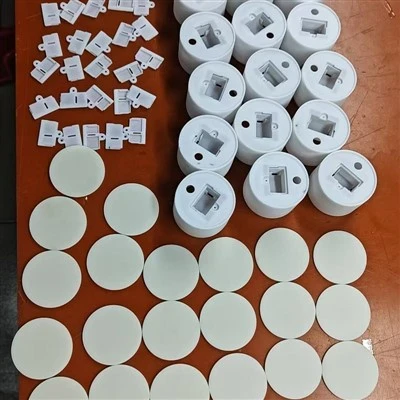
Reach out to our team to chat about your automotive project, whether it’s prototypes, low-volume production, or replacement parts. We’re here to make your process smoother, faster, and way less stressful.
CNC Turning Services References:
- ASTM D638, Standard Test Method for Tensile Properties of Plastics
- Society of Automotive Engineers (SAE) International. (2022). Low-Volume Manufacturing for Automotive Applications
- Polyurethane Development Associates. (2021). High-Temperature Polyurethanes for Automotive Under-Hood Components
Shenzhen Multi-Wins Precision Technology Co., Ltd.
As one of the most professional vacuum casting manufacturers and suppliers in China, we have world-leading production equipment and strong manufacturing capabilities. Please feel free to buy customized vacuum casting made in China here from our factory. Also, quotation is available.
Address: 1 Phase, Yi’an City Central Garden, Longfei Avenue, Longgang District, Shenzhen, GD, China. 518100
E-mail: info@multi-wins.com
WebSite: https://www.multi-wins.com/
