Hey there, thanks for stopping by my little corner of the metal stamping world! I’m Jake, and I’ve been running a small, solid metal stamping shop for the past 12 years—nothing fancy, just a crew that takes pride in turning raw steel, aluminum, and brass into parts that don’t quit. Lately, I’ve been getting so many questions from clients (and even some old friends in the manufacturing game) that go something like, “My stamped part wore out way faster than it should—what gives?” Metal Stamping Parts
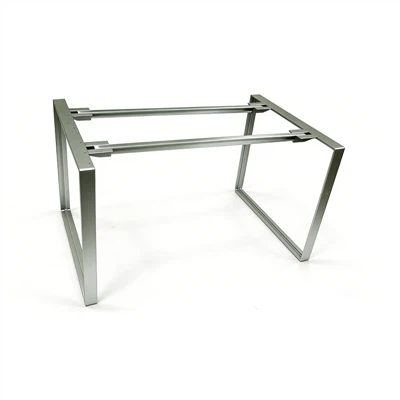
That’s exactly why I wanted to sit down and hash out the real, down-to-earth factors that make or break a metal stamping part’s durability. No stuffy textbook jargon, no generic buzzwords—just the stuff I’ve learned from a thousand runs, a few oops moments, and a whole lot of time spent troubleshooting parts that failed way too soon. Let’s dive in.
First up, and I can’t stress this enough: the type of metal you start with. Duh, right? But you’d be shocked how many people walk in here thinking “all steel is the same” or “aluminum is aluminum.” Nope. Let’s break it down. Take steel, for example—we work with everything from low-carbon steel (think cold-rolled stuff, great for basic brackets that don’t take a beating) to high-strength low-alloy (HSLA) steel, which is basically the heavy lifter. I once had a client who brought back 500 brackets for construction equipment that cracked after 3 months; turns out they ordered low-carbon instead of HSLA because it was 10 cents cheaper per part. Total waste, and they ended up reordering the good stuff anyway. Then there’s stainless steel—wait, not all stainless is corrosion-proof, either. 304 stainless is great for mild environments (like food service equipment), but 316 stainless has that extra molybdenum that makes it resistant to saltwater and harsh chemicals. Last year, a boat manufacturer tried using 304 for marine door hinges; by summer’s end, they were rusting through. They swapped to 316 and haven’t had a problem since. Even aluminum matters: pure aluminum is soft, so we usually use alloys like 6061 or 7075 for stamping parts that need strength and light weight. 6061 is my go-to for automotive interior parts, while 7075 is for aerospace stuff that needs to hold up under huge stress. Picking the wrong base metal is probably the biggest, most avoidable mistake we see.
Next on the list: how you actually stamp the part. Like, the process itself, not just the metal. Let’s talk about two big things here—tolerance control and work hardening. Tolerance is basically how precise the part’s dimensions have to be. If we stamp a bracket that’s supposed to fit into a specific slot, even a tiny deviation (say, 0.01 inch off) might make it sit wrong, bend under pressure, or wear out way faster. I’ve had runs where we messed up the die alignment and parts were 0.008 inch too narrow; those parts would flex and break when the client installed them. We fixed the die, and failure rate dropped to zero. Then there’s work hardening, which is a natural byproduct of stamping. When you bend or stretch metal during the stamping process, it gets harder and less ductile—great for strength, but if we push it too far? Like, if we try to bend a thin piece of steel way more than its ductility allows, it’ll crack. We had a client who wanted a really sharp, 90-degree bend on a 16-gauge steel part; we tried it once, and every 10th part cracked. We adjusted the bend radius (made it a little rounder) and pre-heated the area around the bend to soften it up a bit, and suddenly the parts were solid. Ignoring how stamping affects the metal’s structure is a quick way to get parts that don’t last.
Third, and this is huge—surface treatments and coatings. A lot of people think once the part is stamped, it’s done, but that’s far from true. What you put on top can make it last for years or corrode in months. Let’s start with the basics: painting, powder coating, plating. For parts that go indoors, maybe a standard powder coat works fine, but if it’s going outdoors or in a wet environment, you need something that sticks. Zinc plating is super common for steel parts—it’s sacrificial, meaning it corrodes before the base metal does. But if you get the plating process wrong, like if the zinc layer is too thin or has gaps, rust will sneak through. I once had a client who sourced parts from another shop with a super cheap zinc plating; the parts rusted within 6 months on a farm implement. We re-plated them with a thicker, better zinc layer, and they’re still holding after 2 years. For parts that need even more corrosion resistance, we do passivation for stainless steel—it removes free iron from the surface, which prevents rust spots. And don’t forget about lubrication during stamping! Wait, yeah—lubrication isn’t just to make the stamping process go smoother; it also affects the part’s finish and residual stress. If we use the wrong lubricant, it can leave residues that cause corrosion later, or add extra stress to the metal. We always use food-grade lubricants for parts that go into food, for example, but even for industrial parts, we pick lubricants that don’t leave behind harsh residues that will eat away at the coating.
Then there’s the design of the part itself. I know, it sounds like an afterthought, but a bad design can ruin even the best stamping job. Let’s talk about stress concentrations—places where the metal is more likely to crack or wear out. Sharp corners are the worst here. If you have a part with a square, 90-degree corner, that’s a stress raiser. Over time, pressure will build up there, and it’ll crack. We always tell clients to add a radius to corners, even if it’s just a small one. Another design no-no: thin, uneven thicknesses. If a part has a spot that’s way thinner than the rest, that’s where it will flex and break first. We had a client who designed a bracket with a 0.08-inch thick section and a 0.04-inch thin section right next to it; the thin part snapped during the first load test. We adjusted the design to make the entire section uniform at 0.06 inch, and it’s been perfect ever since. Also, the number of holes and their placement matter. If you drill a hole too close to the edge of a stamped part, that edge will chip or crack. We space holes at least twice the diameter of the hole away from the edge, so that doesn’t happen. I’ve seen so many good parts ruined because the design was rushed or not thought through for durability.
Wait, I can’t leave out environmental factors, either. The part isn’t just sitting on a shelf—it’s probably working in a warehouse, on a construction site, in a car engine, or on a boat in the ocean. All that stuff affects how long it lasts. Salt is a big one—if a part is near a coastal area or a road where they put salt in winter, it’s going to corrode way faster than one in a dry, inland climate. Chemicals too: if a part is going to be near cleaning supplies, industrial solvents, or even fertilizer, those can eat through coatings and metal. And temperature swings—parts in car engines go from freezing cold on a winter morning to blistering hot when the engine’s running. Metals expand and contract at different rates, and if the part’s design or material isn’t matched to that, it will warp or crack. We had a client making parts for a commercial oven; they used standard steel, which warped after a few months from the heat. We switched to heat-resistant tool steel, and that fixed it immediately. Also, wear from friction—if two stamped parts are rubbing against each other, like hinges or gears, you need to think about how to reduce that. Adding a lubrication pocket to the design, or using a metal with better wear resistance, will make those parts last way longer.
Oh, and one more thing—quality control during the stamping process. I’ve seen shops that run parts without checking them until the end, and by then they’ve wasted thousands of dollars on bad parts. We check every single run for dimensional accuracy, surface defects, and right after stamping, we do a quick bend test to make sure there’s no cracking. Last month, we caught a batch of aluminum parts that had a tiny internal crack from the stamping process—we pulled them before they went out, so the client didn’t have to deal with field failures. It’s a little extra work, but it saves everyone money in the long run.
Let me wrap this up, because I know that was a lot. The durability of metal stamping parts isn’t just one thing—it’s a mix of picking the right metal, doing the stamping process correctly, coating it properly, designing it with stress in mind, matching it to its environment, and checking every step along the way. It’s not rocket science, but it does take experience and attention to detail.
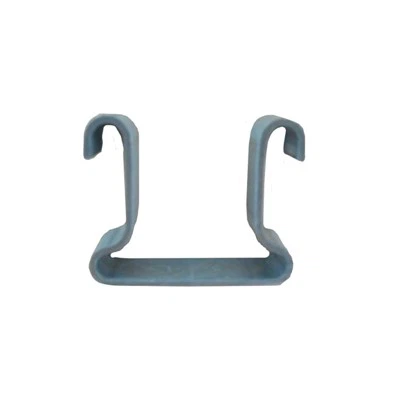
If you’re dealing with stamped parts that aren’t holding up, or if you need help designing a new part that’s built to last, hit me up. I’m here to make parts that work, not parts that fail after a few months. No sales pitch, just real talk and solid parts.
Metal Stamping Parts References
- Dieter, G. E., & Bacon, D. J. (2018). Mechanical Metallurgy (4th ed.). McGraw-Hill Education.
- European Steel Association (EUROFER). (2021). Corrosion Resistance of Steel: Practical Guide for Industrial Applications.
- Aluminum Association. (2020). Alloy Selection Guidelines for Stamped Metal Components.
- American Society for Testing and Materials (ASTM). (2019). Standard Guide for Design of Stamped Metal Parts for Durability.
Shengkun Precision Roll Forming Profiles (Shanghai) Co., Ltd.
As one of the most professional metal stamping parts manufacturers and suppliers in China, we’re featured by quality products and low price. Please rest assured to buy high-grade metal stamping parts made in China here from our factory. Contact us for pricelist and quotation.
Address: No.3 Workshop Building Lane2665 Yexin Highway Yexie Town Songjiang District Shanghai China
E-mail: sk@shengkun-rollforming.com
WebSite: https://www.sk-rollforming.com/
