Hey everyone, if you’ve ever walked a park trail, set up a pop-up market booth on a sunny weekend, or helped a friend build a backyard deck, you’ve probably used tube connectors without even realizing it. I’ve been a tube connector supplier for 8 years now, and one question I get more than any other is: “Can these things actually hold up outside? I don’t want them rusting or falling apart after one rainstorm.” Today I’m breaking that down, no fancy jargon, just real talk from someone who’s spent way too much time troubleshooting connector issues in rain, snow, and even that random hailstorm we got two years ago (still salty about that). Tube Connector
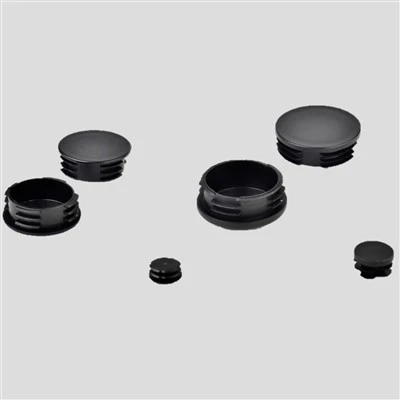
First off, let’s get one thing straight: not all tube connectors are made equal. If you grab the cheapest thin-gauge steel connectors off Amazon for a quick fence build, yeah, they might not make it through a Michigan winter. But if you’re buying quality parts from a supplier who actually tests their materials? Absolutely. The key here is knowing which type of connector works for which outdoor job—and no, it’s not just “pick the shiny one.” I’ve seen way too many customers come to us panicking because their DIY gazebo collapsed after three months, and half the time it’s because they used interior-grade connectors that don’t stand a chance against UV rays or moisture.
Let’s start with the big outdoor categories people use tube connectors for, because that’s the most practical way to look at this. First, residential stuff: backyard decks, pergolas, fire pit enclosures, above-ground pool rails, that temporary play structure you set up for the kids. Second, commercial or public use: park railings, event booth frames, bike racks at a grocery store, even small maintenance sheds. Third, industrial outdoor: temporary worksite barriers, solar panel mount frames, trailer racks for construction supplies. Each of these has different needs, and connectors aren’t one-size-fits-all.
For residential projects, UV resistance is non-negotiable. Sunlight doesn’t just make your deck furniture fade—it breaks down the plastics and coatings on metal parts, too. Standard zinc-plated connectors? They work fine for indoor use or a covered patio, but leave them out in direct sun 24/7 and that zinc coating will chalk up, crack, and let moisture get to the steel underneath within a year. That’s why most of our outdoor-grade connectors come with either powder coating or hot-dip galvanizing. Hot-dip galvanizing is basically dunking the steel in molten zinc, so it creates a thick, rugged barrier that’s way better than thin electroplating. I’ve got a customer in Arizona who’s used our hot-dip galvanized connectors for his backyard pergola for 5 years now, and the only touch-up he’s needed was on the bolts, not the connectors. Powder coating is great too—we offer it in all kinds of colors for people who want their deck railings to match their house, and it’s scratch-resistant enough to handle occasional knocks from lawn chairs or garden tools.
Then there’s moisture, and I’m not just talking about rain. If you’re building something near a pool, a lake, or even a spot that gets morning dew that sits all day, you’ve got to watch for corrosion. Stainless steel connectors are a game-changer here—but not all stainless steel is created equal either. 304 stainless works for most residential outdoor stuff, but if you’re near salt water (think coastal Florida or California), you need 316 stainless, sometimes called “marine grade.” I learned that the hard way a few years back when a hotel in Miami called us upset because their bike rack connectors were rusting in 6 months. Turns out they used 304 stainless, which doesn’t hold up to salt spray. Switched to 316, and they haven’t had an issue since. For people on a budget, we also make vinyl-coated connectors for projects like temporary play structures or garden frames. The vinyl adds an extra layer of protection between the metal and the elements, plus it doesn’t leave rust stains on the aluminum or steel tubes it’s attached to. Win-win, unless you’re running a construction site where you need something super heavy-duty—then vinyl’s not going to cut it for long-term use.
Now, what about extreme temperatures? If you’re building something in a place that goes from 100°F in the summer to -20°F in the winter, material flexibility matters a lot. Metal can expand and contract way more than people think. I’ve seen connectors crack because the steel tube expanded in the summer heat and the connector was too rigid to move with it. That’s why we design our heavy-duty outdoor connectors with slotted bolt holes instead of fixed holes—they let the tube shift a little with temperature changes, so the whole structure doesn’t warp or break. For plastic connectors, same rule applies: regular ABS plastic will get brittle in cold weather, so we use UV-stabilized, high-density polyethylene (HDPE) for all our plastic outdoor connectors. I tested one last year by leaving it in a freezer overnight at 0°F, then dropping it from 6 feet, and it didn’t crack. A regular ABS connector? It shattered. That’s the kind of testing we do in our warehouse, not just lab tests—real world stuff that matters when you’re building something that has to hold up.
Wait, let’s talk about a common mistake people make: load capacity. Outdoor structures have to hold weight that indoor ones don’t. A gazebo that’s fine indoors is going to hold snow, wind, maybe even a few people hanging off the rails. You can’t use a connector rated for 100 lbs on a project that’s going to need to hold 500 lbs. This is where working with a supplier helps, because we can tell you exactly what connector you need for your specific load. Last month, a customer came to us trying to build a small deck for his hot tub, and he used connectors meant for a tiny garden gate. His hot tub weighs 500 lbs empty, plus water, so it was way too much. We swapped him to heavy-duty steel connectors, and he hasn’t had an issue since. I always tell people: don’t guess on load. If you’re not sure, ask. That’s why we spend so much time on the phone with customers walking through their project—way better than them calling us back 6 months later with a collapsed structure.
Now, let’s address the “what about long-term exposure?” question. I’ve got a park in Oregon that’s been using our hot-dip galvanized railings for 7 years now, and the only thing they’ve had to do is tighten a few bolts. No rust, no chipping, no sagging. We also supply connectors for solar panel mounts, which have to be outside for 25+ years. We test those connectors in our salt spray chamber for 1,000 hours straight, which is basically equivalent to 10 years of coastal exposure. If they pass that, they go out the door. That’s the standard we hold ourselves to, and I think that’s why our repeat customers are so high—people don’t want to replace their connectors every other year.
Is there a time when tube connectors aren’t the best for outdoor use? Sure. If you’re building something permanent that’s going to be submerged in water 24/7, like a dock piling connector, you’ll need a specialized marine-grade connector that’s designed for constant water exposure. But for 90% of outdoor projects people are doing—pergolas, decks, event frames, play structures, railings—tube connectors work perfectly fine as long as you pick the right type. The mistake isn’t using tube connectors for outdoor jobs, it’s using the wrong tube connector.
Let me wrap this up with a few quick tips I give every customer when they’re working on an outdoor project, because I want them to get it right the first time. First, check the material: hot-dip galvanized for general use, 316 stainless for saltwater, UV-stabilized plastic for light projects. Second, pay attention to load ratings—don’t skimp here, it’s not worth the safety risk. Third, make sure the connectors fit your tube size. I can’t tell you how many times someone shows up with 1.5 inch tubes and asks for 2 inch connectors. Measure twice, order once. Fourth, don’t forget about installation—tighten bolts properly, add a little anti-seize to stainless steel connectors if you’re in a wet area to prevent galling (that’s when the metal seizes up and you can’t take it apart later). And fifth, if you’re not sure, just hit us up. We don’t charge extra for advice, and it saves everyone the hassle of dealing with a broken structure.
At the end of the day, tube connectors are totally usable outdoors—you just have to choose the right ones, not the cheapest ones. I’ve seen too many companies badmouth tube connectors because they used a cheap no-name brand that fell apart. But with quality parts designed and tested for outdoor conditions? They’re durable, versatile, way easier to work with than welding or other connection methods, and they save you money in the long run because you don’t have to replace them every year.

If you’re working on an outdoor project right now, whether it’s a small backyard job or a big commercial build, we’d love to help you pick the right connectors for the job. Shoot us a message to chat through your needs, and we’ll make sure you get parts that will hold up through rain, sun, snow, and whatever else the elements throw at them. Let’s make sure your project lasts, not just for a season, but for years.
Tube Connector References:
- National Association of Home Builders. (2022). Outdoor Building Material Durability Guide.
- Stainless Steel Industry Association. (2021). Material Selection for Coastal and Marine Outdoor Structures.
- Zinc Development Association. (2020). Hot-Dip Galvanizing Performance in Exterior Residential Applications.
- International Code Council. (2023). Residential Deck Construction Standards for Connection Hardware.
Bai Ye Industrial Co., Ltd.
With abundant experience, we are one of the most professional tube connector manufacturers and suppliers. We warmly welcome you to buy discount tube connector for sale here from our factory. All customized products are with high quality and low price. Contact us for quotation.
Address: No.178, Sec. 2, Zhangyuan Rd., Huatan Township, Changhua County 503, Taiwan (R.O.C.)
E-mail: judy@ku-ping.com.tw
WebSite: https://www.baiyemfg.com/
