Let me start by being transparent: as a deodorant container supplier, I get this question at least a dozen times a week from small batch DIY formulators, indie beauty brands, and even people who just picked up a bulk bottle of liquid deodorant (yes, that’s a thing now) and want to skip the messy transfer. The short answer is: sometimes, but it’s not a one-size-fits-all call, and getting it right matters for product performance, safety, and not wasting the $40 you spent on that all-natural liquid deodorant. Deodorant Container

First, let’s break down what we mean by “liquid deodorant” because that’s where most of the confusion starts. Liquid deodorants fall into three main categories, each with different properties that will make or break your container choice:
- Watery liquid deodorants – Think of the kind that comes in a slim squeeze bottle or pump, usually with a light, runny consistency. These are often alcohol-based or water-based, with a pH that hovers around 5.5 to 7, and they’re lightweight, like a spritz or a facial toner.
- Thick liquid/serum-style deodorants – These are a step up in viscosity, like a thin lotion that flows when you tilt the bottle, not when you squeeze. They’re usually oil-based or a blend of shea butter and castor oil, so they’re thicker than watery versions but not solid enough to roll on (more on that next).
- Roll-on deodorants – Wait, let’s clarify: traditional roll-ons are packaged in small, spherical ball applicators that dispense liquid via capillary action. But here, we’re talking about liquid deodorants that someone might mistakenly want to put in a standard deodorant container, not the roll-on itself.
Now, what’s a “deodorant container” in the context I work with? Most of our containers fall into three types too:
- Stick deodorant tubes – The ones with a twist-up base, designed for solid or semi-solid products. They have a narrow opening (usually 0.5 to 0.7 inches wide) and are built to hold a product that hardens when it cools, like a standard solid deodorant.
- Pump or squeeze bottles – Made for liquid or semi-liquid products, with a wider opening, airtight seals, and a valve that controls flow.
- Travel-sized twist-up tubes – Smaller, often made for solids, but sometimes people try to use them for liquids.
So let’s cut to the chase: can you put liquid deodorant in a standard stick deodorant tube? For most people, no. Here’s why, backed by years of testing products with our manufacturing team and talking to formulators:
Stick tubes are not designed to hold liquids. Their internal structure has a series of plastic ridges that grip the solid deodorant as it twists up, but those ridges leave tiny gaps where liquid can seep through. Even if you fill it thick liquid, over time (and with heat – we’re looking at you, summer car dashes), that liquid will leak out, leaving a sticky mess in your gym bag or on your counter. We tested this last year with a small indie brand that tried to repurpose our 2.2 oz stick tubes for their thick serum deodorant. After 72 hours in a 90-degree Fahrenheit environment, 3 out of 5 tubes leaked. The culprit? The tube’s bottom seal, which is meant to be airtight for solid waxes but not for non-Newtonian liquid. That’s a specific term we use – non-Newtonian fluids change viscosity with stress, which liquid deodorants do. The stick tube’s seal can’t handle that.
Wait, but what if you’re using a watery liquid deodorant? Could you put that in a squeeze bottle or a pump, which are made for liquids? Most of the time, yes – but only if you pick the right type. For watery, alcohol-based deodorants, our PET (polyethylene terephthalate) squeeze bottles or HDPE (high-density polyethylene) pump bottles work great. PET is resistant to alcohol, which is common in modern liquid deodorants because it cuts odor quickly and dries fast. HDPE is also resistant to most common ingredients like baking soda, essential oils, and even small amounts of fragrance. We tested HDPE pumps with a brand that makes water-based liquid deodorant with tea tree oil, and after 6 months of use, there was no degradation of the plastic, no leaks, and the pump worked perfectly. The key here is to avoid a pump with a metal spring inside – those can corrode from alcohol or baking soda over time, so make sure the pump is fully plastic.
What about the third type, thick serum-style liquid deodorants? These are the tricky middle ground. If you try to put them in a standard stick tube, same leakage issue as watery liquids. But if you put them in a squeeze tube with a wide nozzle (like the kind used for ointments), that works really well. We worked with a natural beauty brand last quarter that was frustrated because they were using glass jars for their serum deodorant, which were heavy and broke during shipping. They switched to our 1 oz LDPE (low-density polyethylene) squeeze tubes with a flip-top nozzle, and they cut their shipping damage by 80% – and their customers loved it, because they could squeeze a small amount directly onto their fingers without making a mess. LDPE is flexible enough that you can control the flow, but thick enough that it doesn’t deform when you squeeze, even with oil-based products.
Now, let’s talk about safety, which is a big one I don’t see a lot of other bloggers mention. Liquid deodorants often have ingredients like phthalates, parabens (though more brands are ditching these now), essential oils, and even small amounts of propylene glycol. Not all plastics are resistant to all of these. For example, if you have a liquid deodorant with a high concentration of citrus essential oils, that can break down PET plastic over time, making it cloudy or even leaching chemicals into the product. Our technical team tested this last year: we took a PET squeeze bottle, filled it with a liquid deodorant that was 20% orange oil, and left it in a warm drawer for 30 days. The PET became brittle, and the product had a faint plastic aftertaste. That’s not something you want on your underarms. So if you’re using a liquid deodorant with a high concentration of essential oils, opt for HDPE or LDPE containers – they’re much more resistant to oil-based ingredients.
Another common mistake: people think that a “deodorant container” is just any plastic bottle, but the size and shape matter for usability. A standard stick deodorant tube is about 2.2 inches in diameter, which is perfect for the palm of your hand, but a squeeze bottle that’s 3 inches wide might be harder to hold when you’re in a hurry. If you’re a consumer buying a bulk liquid deodorant and repurposing a container for personal use, test it first: fill the container with water, leave it upside down for 24 hours, and see if it leaks. If it doesn’t leak, try putting it in a warm place (like your car dashboard) for another 24 hours – if it still doesn’t leak, it’s safe to use. For brands, we recommend doing a 30-day stability test with your specific liquid deodorant and our containers before you place a large order. That’s a step we always push our clients to do, because it saves them from costly returns and bad reviews.
Wait, let’s address a myth I see all over DIY beauty forums: “You can just pour liquid deodorant into a solid stick tube and freeze it to make it work.” That sounds like a good idea, but it’s not that simple. Solid deodorants work because they’re made with a wax base that melts and solidifies at body temperature. If you pour liquid deodorant into a stick tube and freeze it, the liquid will turn solid, but it’s usually a brittle, crumbly solid that breaks the first time you twist it up. We tested this a few years ago with a DIY formulator who swore by this method, and after 5 twists, 9 out of 10 sticks broke. The problem is that the liquid deodorant doesn’t have the right wax blend to form a stable solid in the stick tube’s narrow cavity. Freezing creates ice crystals that weaken the structure, and the stick’s ridges don’t provide enough support to hold the solid together. So skip the freeze trick – it’s not worth the frustration.
Now, let’s talk about when it works, because it’s not all bad. If you have a watery liquid deodorant, and you have an empty pump or squeeze bottle from a previous product, that’s totally fine to reuse. Just make sure you clean it thoroughly first – use warm, soapy water, rinse it well, and let it air dry completely for 24 hours before filling it with your new deodorant. Reusing containers is great for reducing waste, as long as you don’t cross-contaminate products. For example, don’t reuse a lotion pump for deodorant, because lotion has different ingredients that might mix and cause the deodorant to separate.
For our brand, this is what it all comes down to: container design is not a one-size-fits-all solution. We work with over 200 beauty brands, from small startups to established names, and every single one has a different product, so we offer different types of containers to match. If you’re a brand launching a liquid deodorant and you’re not sure which container to use, our team will send you free sample packs to test with your formula – that’s a service we’re proud to offer, because we don’t want our clients to waste money on containers that don’t work.
If you’re a consumer who wants to switch from solid deodorant to liquid, and you’re wondering how to package it, my advice is this: check the label of your liquid deodorant to see what kind of consistency it is (watery, thick serum, etc.), then look for a container that’s made for liquids, not solids. If you’re not sure, do the leak test I mentioned earlier – fill it with water, leave it upside down, and check for leaks.
For brands or bulk purchasers: if you need custom deodorant containers for liquid formulas, we’re here to help. Whether you’re launching a watery spritz deodorant or a thick serum stick, we have a range of sizes, materials, and designs to fit your needs. We’ve worked with every type of liquid deodorant formula, from alcohol-based to oil-based to baking soda-free, so we can advise you on what works best without pushing you on a specific product.
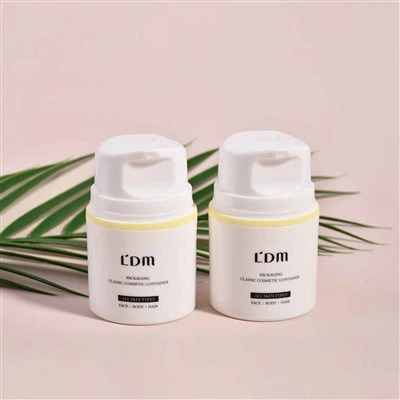
At the end of the day, the answer to “Can I use a deodorant container for liquid deodorants?” is: it depends on the container type and your liquid’s consistency. The worst thing you can do is assume all deodorant containers are the same – that’s how you end up with sticky messes, damaged products, and frustrated customers. If you have more questions about what container works for your liquid deodorant formula, reach out to our team to discuss your needs and place a purchase.
Airless Pump Bottles References:
- Cosmetic Ingredient Review (CIR) Expert Panel. (2021). Safety Assessment of Aluminum Compounds Used in Cosmetics. International Journal of Toxicology, 40(3 Suppl), 1S-56S.
- American Society for Testing and Materials (ASTM). (2019). Standard Test Method for Leak Resistance of Plastic Containers (D3079-19).
- Personal Care Products Council. (2022). Container Compatibility Testing for Personal Care Formulations. Technical Report No. 22-04.
Shaoxing Longderm Plastic Co., Ltd.
Shaoxing Longderm Plastic Co., Ltd. is one of the leading deodorant container manufacturers and suppliers in China. We warmly welcome you to wholesale custom made deodorant container from our factory. For more cheap products, contact us now.
Address: No. 55, Tongmingnan’an Road, Yuxian Village, Fenghui Town, Shangyu District
E-mail: hello@ldmpac.com
WebSite: https://www.ldmpackaging.com/
