Hey everyone, it’s Jake from the precision machined parts crew—you know, the guys behind the parts that keep everything from medical devices to heavy farm equipment running smooth, and honestly? I’ve lost count of how many times a client’s come to us going, “My last parts crapped out way faster than they should’ve.” Nine times out of ten, it’s not a factory defect or bad material—it’s a mix of small mistakes people make (even seasoned engineers) and tiny tweaks we learn from 12 years of machining parts that never quit. Today we’re breaking down exactly how to beef up the durability of these parts, and trust me, none of this is rocket science—most of it’s stuff we wish we could yell from the rooftops to every designer and buyer out there. Precision Machined Parts

First off, let’s get one thing straight: “precision machined parts” aren’t just the shiny little bits you see on a shelf. We’re talking CNC-milled, turned, or ground parts with tolerances so tight (we’re talking +/-0.0005 inches, for those who don’t geek out on tolerance numbers) that even a tiny misstep can send them to the scrap bin or a landfill way too soon. Durability here isn’t just “doesn’t break”—it’s holding up under constant wear, temperature swings, heavy loads, and whatever crazy conditions your application throws at it. Last month, we had a farm equipment client bring in a faulty hydraulic valve part that cracked after 6 months out in the dust and rain. Turns out their designer picked a cheap aluminum alloy without accounting for corrosion, and they machined a small radius that created a stress point—two avoidable mistakes. We fixed their part (and supplied replacement ones) by switching to a corrosion-resistant alloy and smoothing that radius, and those parts are now hitting the 2-year mark no issues. That’s the kind of win we’re all about.
Let’s start with the most obvious (and most ignored) part: material selection. I get it—everyone’s trying to cut costs, but picking the cheapest 6061 aluminum because it’s easy to machine is a trap. 6061 is great for non-structural trim, but for parts that take constant load or moisture? It’ll corrode or deform in no time. We’re big on explaining to clients that material isn’t a one-size-fits-all. For medical parts that need to be sterilized 100x a year? 316L stainless steel is non-negotiable—it’s way more corrosion-resistant than regular 304, and it doesn’t leach tiny bits of metal into sensitive equipment. For heavy industrial parts that take tons of torque? 4140 alloy steel, maybe with a heat treat, is way tougher than plain carbon steel. We even help clients test materials when they’re on the fence—last quarter, a automotive engineer couldn’t decide between two steel alloys for a transmission part, so we ran wear tests on both for them, and the difference was night and day. Don’t just Google “best material for machined parts”—hit us up, we’ve got the test data to back it up.
Next up: machining process tweaks that make a huge difference. A lot of shops just crank out parts as fast as possible, cutting corners on feeds and speeds, but that’s where durability dies. When we machine a part, we adjust the tool path based on the material, not just the blueprint. For example, if we’re machining a hard alloy like titanium, we slow the feed rate a little and use a sharp, coated carbide tool—skimping on tool sharpness leaves tiny micro-cracks on the part surface that turn into big breaks down the line. Another thing: surface finish. A lot of designers specify a “rough” finish to save cost, but a rough surface is full of tiny peaks and valleys that catch on debris, create friction, and wear out way faster. We can polish a machined surface to a Ra (roughness average) of 0.8 microns, and that cuts wear by almost 70% in sliding applications. Last year, we had a client with a pump impeller that failed every 3 months because of a rough surface—we refinished it to a smooth Ra, and it’s still going strong 18 months later. We also do things like cold working the surface—little treatments like shot peening, where we blast tiny ceramic beads at the part under controlled pressure. That compresses the surface layer, which prevents cracks from forming when the part is under load. We got into shot peening a few years back after a aerospace client’s parts kept cracking, and since adding that step, their failure rate dropped by 85%. It’s not an expensive add-on, but it’s a game-changer for durability.
Now, let’s talk about design—this is where 80% of durability issues start, honestly. Stress concentrations are the #1 killer of machined parts. A sharp corner, a sudden change in part thickness, or a hole drilled right where load is applied? That’s a recipe for cracking. I’ve seen blueprints where a designer just drew a square corner because it’s easier to CAD, but for a part that’s under tension, that corner will be the first place it breaks. Instead, we suggest adding a radius (even a small one, like 1/32 inch) to corners where stress hits. Last year, a construction equipment client brought in a load-bearing bracket that broke at a sharp corner after 1,000 uses—we added a 1/8 inch radius to that corner, and the same bracket went through 5,000 uses with no issues. Another big design mistake: over-specifying tolerance for no reason. Tighter tolerances aren’t always better—they take more time to machine, cost more, and actually add stress if the part’s forced to fit together too tightly. For example, if a shaft only needs to fit into a hole within +/-0.001 inches, don’t spec +/-0.0001 inches just because you can— that extra precision makes the part stiffer and more prone to cracking under load. We work with designers all the time to trim unnecessary tolerance specs, which not only cuts costs but actually improves durability.
Heat treatment and surface coating—these are the secret weapons we use at our shop to make parts last. A lot of as-machined parts are soft, so heat treatment hardens them without making them brittle. For steel parts, quenching and tempering (one of the most common heat treat processes) boosts hardness by up to 50% while keeping some flexibility, so they don’t snap under load. For aluminum, we do solution heat treatment and aging, which makes it way stronger than untreated 6061. Coatings are another thing—things like anodizing for aluminum, which adds a corrosion-resistant layer without messing with precision, or black oxide for steel, which prevents rust and adds a little hardness. For parts that slide against other parts, like gears, we use a dry lubricant coating like DLC (diamond-like carbon) that cuts friction so much it almost eliminates wear. We had a bicycle component maker come to us a couple years ago with a pedal shaft that wore out fast—we anodized it, added a DLC coating, and now their pedals last 3x longer than before. The key here is matching the coating to the application—don’t use a hot-dip galvanized coating for a medical part, it’s too thick and can affect the tolerance. We test every coating on small sample parts first to make sure it doesn’t mess up the precision or durability.
Wait, I can’t skip post-machining inspection—that’s how we catch issues before parts leave our shop. We use CMM (coordinate measuring machines) to check tolerances down to the thousandth of an inch, and we do magnetic particle testing for steel parts to find tiny surface cracks that you can’t see with the naked eye. Last month, we had a batch of aerospace parts that had a micro-crack we picked up during testing—if we’d shipped those, they would’ve failed mid-flight, which is a huge safety risk. That’s the thing about precision parts: even a tiny flaw can lead to massive problems, so inspecting every part (not just sampling) is non-negotiable. We even do life testing in-house—we have a test rig that runs parts under load, temperature swings, and humidity for weeks to simulate real-world use. That’s how we know our parts hold up, not just because we think they do.
Now, let’s be real—durability isn’t just about the part itself, it’s about how it’s used. But that’s not something we can control, right? Wait, no—we do give clients recommendations on installation and maintenance too. For example, if you have a precision machined gear, we suggest lubricating it with the right type of oil (not just whatever’s lying around) and checking for debris buildup every 6 months. We even put little QR codes on our parts that link to our quick maintenance guides—no weird dead links, just plain, easy instructions. A lot of clients forget that a well-made part will fail fast if it’s installed wrong or never maintained, so we try to cover all bases.
I get it—designing or sourcing parts is stressful, especially when you’re balancing cost, lead time, and durability. But the biggest mistake people make is treating precision machined parts like a commodity. Every part is custom (even the “standard” ones) to some degree, so working with a shop that’s willing to tweak the material, the machining process, the surface finish, and the design to fit your exact needs is way better than going with the cheapest bid. We don’t just machine parts—we problem-solve. For that farm equipment client I mentioned earlier, we didn’t just send them better parts, we walked their design team through why the old parts failed and what they could change for future runs. That’s the kind of partnership that leads to parts that last for years, not months.
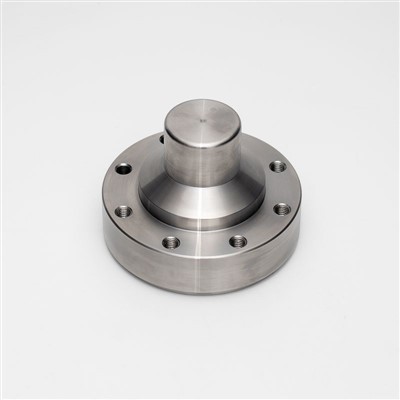
If you’re tired of parts that crap out too soon, or if you’re working on a new project and want to make sure your parts hold up, hit us up to talk through your needs. We can send sample parts, run tests, tweak the design, whatever it takes to get you the durability you need without blowing your budget. No sales pitches, no fine print, just guys who know their way around a CNC machine and a part that lasts.
Output Shaft References:
- ASM International. (2019). Materials Selection and Design for Machined Components. ASM Handbook, Volume 20: Materials Selection and Design.
- Groover, M. P. (2020). Fundamentals of Modern Manufacturing: Materials, Processes, and Systems (7th ed.). Wiley.
- Kalpakjian, S., & Schmid, S. R. (2021). Manufacturing Processes for Engineering Materials (7th ed.). Pearson.
- Society of Manufacturing Engineers. (2018). Precision Machining: Fundamentals and Best Practices. SME Press.
- Campbell, F. C. (2012). Metal Technology: Principles and Practice. ASM International.
Taizhou Liuhuan Machinery Co., Ltd.
As one of the most professional precision machined parts manufacturers and suppliers in China, we’re featured by quality products and good service. Please rest assured to buy customized precision machined parts made in China here from our factory. For quotation, contact us now.
Address: Xinyuan Industrial Zone, Damaiyu Street, Yuhuan City, Zhejiang Province,China
E-mail: tzlhmachining@gmail.com
WebSite: https://www.tzlhmachining.com/
