Hey there, let’s cut to the chase—if you’re diving into craft brewing, or already knee-deep in it, you know the equipment doesn’t just “make the beer.” It’s the backbone of every good batch, right? As a craft brewing equipment supplier, I’ve spent years fielding questions from homebrewers scaling up, nano-brewers getting their first system off the ground, and even established brewers tweaking their setup to nail that next iconic recipe. One question I get more than any other is: “What materials are actually used for this stuff?” Craft Brewing Equipment
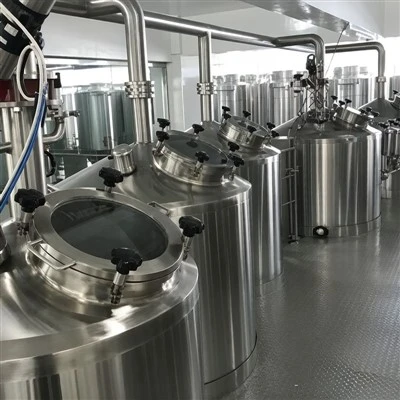
It’s not like you can just grab any metal or plastic and call it a day—there’s a science to this, even if it doesn’t feel like it. Bad material choices mean off-flavors, contamination, extra cleanup work, and even safety risks. Let’s break down the real, go-to materials we use day in and day out, why we swear by them, and when (if ever) you’d pick something else for your rig.
First up, the big one everyone already expects, but let’s get specific: 304 & 316 Stainless Steel. This isn’t your regular stuff you have in a random kitchen pot. Wait—actually, a lot of homebrewers do start with kitchen stainless, but that’s usually lower grade, and it shows. Let’s start with 304, the workhorse of craft brewing. Why? It’s got the right mix of chromium and nickel to resist rust, hold up to constant contact with water, malt, hops, and that slightly acidic beer during fermentation. It’s non-reactive, so it won’t leach weird metallic tastes into your wort (that’s the unfermented beer, for new folks) or finished brew. Cleanup is a breeze—no weird residue sticking around if you’re using standard brewery cleaners (we’re talking alkaline cleaners for heavy grime, acid cleaners for mineral buildup, stuff like that).
But why 316? Oh right, that’s the heavy-duty cousin. 316 has molybdenum added to the mix, and that changes everything. When would you need it? If you’re handling really high-gravity worts, or working with things like lactic acid, or even if your local water is super high in chlorine or other chemicals that can eat through 304 over time. We use 316 for anything that’s going to be in contact with the beer for extended periods—like fermenters, brite tanks (those are the tanks where the beer gets carbonated before packaging), and even some parts of our hot liquor tanks if a brewer is using extra aggressive sanitizers. It’s more expensive, sure, but if you’re looking to build a system that’ll last 10+ years without corroding, it’s worth every extra penny.
I’ve seen too many brewers cut corners here, buying cheap 304 knockoffs that end up pitting after a year. Pits trap gunk, you can’t clean them properly, and before you know it, your beer has that weird metallic aftertaste that makes customers go “nah.” So trust me on this—stainless steel isn’t just “stainless.” Grade matters, and we never skimp on it for the parts that touch your beer.
Next, something people rarely ask about but should: Copper. Wait, copper? Isn’t that old-school? Yeah, it’s traditional, but there’s a reason brewers have been using it for centuries, and we still spec it for specific parts of our systems. Copper is amazing at heat transfer. If you’ve ever had a boil kettle that heats evenly and fast, chances are it’s got a copper bottom. It’s also great at removing unwanted sulfur compounds from the boil—those are the ones that give beer a skunky, rotten-egg taste, yuck. But here’s the catch with copper: it’s reactive. If copper is left in contact with beer (which is acidic) too long, it can leach copper ions. That’s not good for you, and it’ll ruin the beer’s flavor. So we only use copper for parts that are designed to be in contact with the boil but get separated quickly—like the kettle bottoms, or the distillation sections if you’re doing high ABV brews. We line those copper parts with 304 stainless? Or make sure they’re not sitting in wort post-boil. No exceptions. I once had a brewer bring us a setup with a copper fermenter he picked up secondhand—we tested it, and the copper levels were way too high for safe beer. Had to tell him to scrap that, and he ended up thanking us a few months later when his new 304 fermenter was working perfectly.
Now, let’s talk about the parts that aren’t big tanks or kettles—like valves, fittings, hoses. This is where a lot of folks mess up, using random hardware store parts that aren’t designed for brewery use. Let’s start with valves. You want either stainless steel valves (304 or 316, same rule as before) or maybe food-grade PVC? Wait, no—PVC is a hard pass for parts that touch hot liquids. The chemicals in PVC can leach when heated, and that’s a no-go. Most valves we use are either tri-clamp stainless steel (tri-clamp is the easy-to-connect, quick-disconnect style that’s standard in craft breweries now, makes cleaning way faster) or maybe brass valves if they’re not touching the beer directly—like drain valves on the outside of a tank, not the ones that move wort.
Hoses are another big one. You can’t use regular garden hose here—those have plasticizers that leak into beer. We use EPDM (ethylene propylene diene monomer) hoses for most brewery applications, especially for cold transfers or rinsing lines. EPDM is heat-resistant, holds up to sanitizers, and is food-safe. If you’re moving hot wort (up to 170-212°F), you need food-grade silicone hoses. Silicone can handle higher temps, doesn’t leach, and is flexible enough to route around tanks without kinking. We always make sure every hose we supply is marked “food-safe” and meets FDA standards—no exceptions. I’ve had a brewer call us panicking because he used a cheap hose from a homebrew shop for his first batch, and it left a weird rubbery taste. Switched to our EPDM hoses, problem gone.
What about the stuff that’s not direct contact, but still important? Like gaskets, seals, maybe even the insulation on tanks? Gaskets for tri-clamp connections—you need food-grade gaskets, usually made of silicone or EPDM. Regular rubber gaskets have oils that can transfer to beer when you’re heating things up. Seals on fermenter lids? Same deal—silicone, not cheap stuff. And insulation? Most brewers use closed-cell polyurethane foam insulation for tank jackets. It’s lightweight, doesn’t absorb water (which would make it moldy, gross), and keeps the fermenter at a consistent temp, which is non-negotiable for good fermentation. If you use regular fiberglass insulation, it can shed fibers into the area around the tank, and if it gets wet, it’s a breeding ground for bacteria. We always include proper insulation with our tanks, no cutting corners here.
Wait, let’s get to the one material that a lot of new brewers ask about: plastic. When is plastic okay? Only if it’s food-grade, and never for things that touch hot wort or finished beer. We use food-grade polyethylene (HDPE) for things like hot liquor tank lids, or small transfer containers for sanitizer. Even then, we only use it for parts that aren’t in constant contact with the beer. I see some people using plastic fermenters, and hey, if you’re a homebrewer doing 5-gallon batches, that’s fine for small scale. But if you’re scaling up to 10-barrel or more, plastic just doesn’t hold up. It scratches easily, scratches trap bacteria, and over time, the plastic can get stained and hard to clean. For commercial systems, plastic is a hard no on any part that touches the beer long-term.
Let’s address a common myth: aluminum. A lot of old school homebrewers swear by aluminum kettles, but here’s the thing—aluminum reacts with acidic liquids. Beer is acidic, right? PH is usually around 4-5, and aluminum will leach into the wort, giving it a metallic, tinny taste. It’s also softer, so it scratches easy, and those scratches are impossible to clean completely. We stopped using aluminum for any brewery equipment years ago, even for small homebrew setups. Way too many complaints about off-flavors from old aluminum kettles.
Now, let’s talk about why this all matters for you, whether you’re a nano-brewer just starting out or a established spot looking to upgrade. The materials don’t just affect flavor—they affect your bottom line. Cheaper materials might save you a few bucks upfront, but if your system corroded in a year, or your beer tastes off so you’re losing customers, that’s way more expensive. We build every part of our systems with longevity and beer quality in mind. All our stainless steel parts are 304 or 316, we use food-grade hoses, gaskets, and valves, and we only spec materials that won’t interfere with your process.
At the end of the day, craft brewing is about making great beer, and great beer starts with great equipment. The materials you choose aren’t just specs on a page—they’re the difference between a batch that’s a hit and one that gets dumped.
If you’re putting together a new system, upgrading an old one, or just have questions about what materials are right for your specific brews—hit us up. We’ve been in this game long enough to know what works, what doesn’t, and can help you pick the right materials for your budget and your recipes. No pushy sales stuff, just real talk from a team that lives and breathes craft brewing equipment.
Auxiliary System References:
- American Society of Mechanical Engineers (ASME) Boiler and Pressure Vessel Code, Section VIII: Pressure Vessels, 2023
- Food and Drug Administration (FDA) Food Contact Substances (FCS) Notifications, 2024
- Brewers Association – “Brewery Equipment Material Selection Guide,” 2022
- Copper Development Association – “Copper in Brewing: Best Practices for Food Safety,” 2021
- EPDM Association – “EPDM as a Food-Grade Elastomer: Applications in Breweries,” 2023
Wenzhou Jinggong Machinery Equipment Co., Ltd.
We are one of the most professional craft brewing equipment manufacturers and suppliers in China. With abundant experience, we warmly welcome you to buy customized craft brewing equipment at competitive price from our factory. If you have any enquiry about quotation, please feel free to email us.
Address: No.Jiadi Industrial Zone, Yaoxi Town, Longwan District, Wenzhou City, China.
E-mail: jinggong2026@163.com
WebSite: https://www.jg-ind.com/
