Hey there, thanks for stopping by! I’m Sarah, and for the last 8 years, I’ve been selling activated carbon to folks ranging from water treatment plants to craft breweries and even small air purification brands. Most days, I get asked the same question: “How the heck does this black, crumbly stuff actually ‘grab’ organic compounds?” It’s not magic, trust me—though if you’ve ever seen a filthy water sample run through a filter and come out crystal clear, it feels like it. Let’s break this down like we’re chatting over coffee, no stuffy science jargon that’ll make your eyes glaze over. Activated Carbon
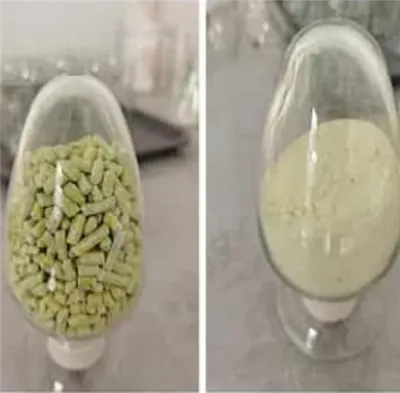
First off, let’s get one thing straight: activated carbon isn’t your average charcoal you toss on a barbecue. Yeah, it’s made from similar stuff—usually coconut shells, coal, wood, even peat—but the processing is what makes it game-changing. Here’s the quick, no-lab version: you heat the raw carbon material super hot (like 800–1200°C, but who’s counting?) in a low-oxygen environment, then blast it with steam or carbon dioxide to “activate” it. Activation burns out all the messy bits inside, leaving a structure that’s basically a giant, tangled maze of tiny holes. I’m talking pores so small you can’t see ’em with a regular microscope—some are as tiny as 0.5 nanometers. To put that in perspective, a single human red blood cell is about 7,000 nanometers wide. That’s how much surface area this stuff has. A gram of activated carbon? We’re talking 500–1500 square meters of surface area. For you metric folks, that’s like a half basketball court up to three and a half basketball courts, all from one tiny gram of black powder or pellets. That surface is where the magic (aka adsorption) happens.
Wait, hold on—important distinction: adsorption vs. absorption. Absorption is when a sponge soaks up water, right? The water actually goes inside the sponge. Adsorption is when molecules stick to the surface of something. That’s what activated carbon does. It’s like how static sticks a balloon to your hair, except on a molecular level. Organic compounds—think things like pesticides, volatile organic compounds (VOCs), chlorine, leftover brewery gunk, even bad smells like mold or skunk spray—are the ones we’re talking about here. In simple terms, organic compounds are molecules that have carbon and hydrogen in them (though some have other elements too, like oxygen or chlorine). They’re the bad guys we want to get rid of from water, air, or whatever we’re treating.
So why do these organic molecules want to stick to activated carbon? Two big forces are at play here: van der Waals forces and hydrophobicity. Let’s start with van der Waals—don’t panic, it’s not as scary as it sounds. All molecules have tiny, temporary charges, right? Even neutral ones. Picture a molecule where at one split second, there’s a little more negative charge on one side and positive on the other. When another molecule’s split-second charges line up, they get pulled together weakly. It’s like the tiny, invisible pull between two magnets that only works when they’re super close. Since activated carbon has all that massive surface area, there are millions of these little contact points between the carbon pores and the organic molecules. Multiply that by a gram’s worth of surface area, and you’ve got enough pull to hold onto a ton of contaminants.
Then there’s hydrophobicity—hydro means water, phobia means fear. So activated carbon hates water (well, kind of). Its surface is non-polar, while water is polar. Think of polar molecules as little magnets that attract other polar molecules—so water sticks to itself, like how oil and vinegar separate. Organic compounds that are also non-polar don’t get along with water, so they’d rather stick to the non-polar surface of activated carbon than stay in the water (or air, same logic applies). That’s why activated carbon is so good at pulling non-polar organics out of water or air. If you’ve ever bought a fridge filter that smells like old food, that’s activated carbon working its hydrophobic magic to grab the funky organics that make your fridge smell bad.
Now, not all organic compounds are created equal, so adsorption works differently depending on the molecule’s size, polarity, and what we call “solubility.” Size matters a lot here. Remember all those tiny pores we talked about? If an organic molecule is too big to fit into the pores, it can’t get to the surface where the van der Waals forces are. For example, larger molecules like humic acid (the stuff that makes well water yellow) fit into bigger pores, while smaller ones like benzene (a common VOC from gasoline) slip into the tiny micro-pores. That’s why we have different grades of activated carbon—if you’re dealing with small VOCs, we send you carbons with more tiny pores; if it’s larger compounds, we go for ones with bigger pores.
Polarity is another factor. Like I said earlier, non-polar organics stick way better, but even some polar organics can adsorb. Wait, but what about if the organic is super polar, like methanol? Not so much. The activated carbon’s non-polar surface doesn’t pull as hard on super polar molecules, so they pass right through. That’s why activated carbon is perfect for treating water that has some polar contaminants, but not all. We always ask our clients what exactly they’re treating—if it’s just chlorine and small VOCs, one grade works; if they’ve got a mix, we’ll recommend a blend or a specific type.
Temperature also plays a role, but not how you might think. Adsorption is usually exothermic, meaning it releases heat. So if you heat up the water or air being treated, it becomes harder for the molecules to stick—they have more energy to bounce around and break free. That’s why in water treatment, we don’t usually use activated carbon for super hot water. Conversely, lower temperatures can actually make adsorption better, since molecules are moving slower and more likely to get stuck in the pores. We once had a brewery client in Minnesota who used our activated carbon to treat their process water in the winter; it worked way better for them than in the summer, which was a nice little side note they appreciated.
Let’s talk about real-world examples, since that’s what matters most. Last year, we worked with a municipal water treatment plant that was having issues with trihalomethanes (THMs)—byproducts from chlorine reacting with organic matter in tap water. THMs are carcinogenic, so they needed to get rid of them. We recommended our standard granular activated carbon (GAC) with a mix of micro and meso pores. Within a month, they cut THM levels by 92%—way above the EPA’s required limit. Another client is a small air purifier brand that uses our powdered activated carbon (PAC) in their filters to capture VOCs from new furniture and paint fumes. They told us their customers rave about not having that “new furniture smell” anymore. Even a cat litter company uses our activated carbon in their litter to grab ammonia and other odor-causing organics—genius, right?
Now, you might be wondering: what happens when the activated carbon is full? Does it stop working? Yep, eventually. All those pores get clogged with contaminants, so there’s no more surface area to grab new stuff. That’s called “adsorption saturation.” There are two ways to handle that: either you replace the activated carbon, or you regenerate it. Regeneration is the fancy term for heating the used carbon back up to high temps (without oxygen) to burn off the trapped organic compounds, turning them back into gas that can be captured and used. We offer both options—some clients prefer to swap in new carbon every few months, others regenerate it to save money, especially if they’re using a lot. For example, the municipal water plant I mentioned earlier regenerates their GAC on-site every 6–12 months, which cuts their costs by about 40% compared to buying new carbon all the time.
As your go-to activated carbon supplier, we don’t just sell you a bucket of black stuff and walk away. We’ve seen firsthand how this technology works, and we tailor solutions to what you actually need—no one-size-fits-all garbage. Whether you’re treating industrial wastewater, cleaning air for a lab, or making sure your home’s well water is safe, we’ll sit down with you to figure out which type of activated carbon (GAC, PAC, extruded pellets, even impregnated carbon for specific contaminants) will work best. We’ve tested our products in real applications, not just lab beakers, so we know what works when you need it most.
If you’ve got questions—whether you’re just curious about how it works, or you need a quote for a project—hit us up. I get it, sourcing the right activated carbon can be confusing, but that’s what we’re here for. No pushy sales talk, no complicated spreadsheets until you’re ready, just straight answers based on years of actual experience in the field. Don’t waste time and money on the wrong carbon—let’s chat about what you’re treating, what your goals are, and we’ll find the perfect fit for you.
Dithiophosphate References:
- Crittenden, J. C., et al. (2012). Water Treatment: Principles and Design. John Wiley & Sons.
- Qi, J., et al. (2019). Activated carbon for adsorption of organic compounds: A review. Journal of Environmental Chemical Engineering, 7(3), 103168.
- Hufnagel, K., & Bandosz, T. J. (2020). Fundamentals of activated carbon adsorption: Role of surface chemistry and porosity. Carbon, 167, 212-228.
- American Water Works Association. (2021). Activated Carbon in Water Treatment. AWWA Manual M20.
- Zhang, L., et al. (2018). Hydrophobicity of activated carbon and its impact on adsorption of organic pollutants. Separation and Purification Technology, 194, 277-285.
Bitop Bihope Qingdao Mining Co., Ltd
Bitop Bihope Qingdao Mining Co., Ltd. is one of the most professional activated carbon manufacturers and suppliers in China, featured by quality products and low price. Please rest assured to buy discount activated carbon in stock here and get quotation from our factory. Customized orders are welcome.
Address: Room 410, 4th Floor, Shengquan Business Building, No. 263 Yitong Road, Huangdao District, Qingdao City, Shandong Province, China
E-mail: btbhmining@163.com
WebSite: https://www.btbhmining.com/
