What is the cost of a Pasteur pipette? This seemingly simple question actually involves a wide range of factors that determine its price. As a supplier of Pasteur pipettes, I’d like to delve into the details to help you understand the cost structure and the value behind these essential laboratory tools. Pasteur Pipette
Understanding the Basics of Pasteur Pipettes
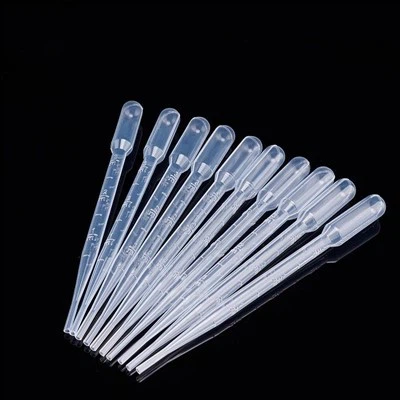
Pasteur pipettes, also known as droppers, are slender glass or plastic tubes used in laboratories for transferring small volumes of liquids. They are named after the French chemist and microbiologist Louis Pasteur, who made significant contributions to the fields of vaccination, microbial fermentation, and pasteurization. The design of Pasteur pipettes is relatively simple, with a tapered end for precise liquid dispensing and a bulb at the other end for suction.
Factors Affecting the Cost of Pasteur Pipettes
Material
One of the primary factors influencing the cost of Pasteur pipettes is the material from which they are made. Glass Pasteur pipettes have been a staple in laboratories for decades due to their chemical resistance, transparency, and ability to withstand high temperatures. However, the production of glass pipettes involves a complex manufacturing process, including melting, blowing, and shaping the glass. This labor – intensive process, along with the cost of raw materials and energy, contributes to a higher price tag.
On the other hand, plastic Pasteur pipettes have become increasingly popular in recent years. Plastic pipettes are typically made from materials such as polyethylene or polypropylene, which are less expensive than glass. The manufacturing process for plastic pipettes is more automated, involving injection molding or extrusion. This results in lower production costs and, consequently, a more affordable price for the end – user.
Quality and Precision
The quality and precision of Pasteur pipettes also play a significant role in determining their cost. High – quality pipettes are designed to provide accurate and reproducible liquid transfers. They are manufactured to strict tolerances, ensuring that the volume of liquid dispensed is consistent. For example, in applications such as cell culture or PCR, even a slight variation in the volume of liquid can have a significant impact on the experimental results.
To achieve high precision, manufacturers may use advanced manufacturing techniques and quality control measures. This includes using precision molds, conducting calibration tests, and performing rigorous inspections. These additional steps add to the production cost but are essential for applications where accuracy is crucial.
Packaging and Sterility
The packaging and sterility of Pasteur pipettes are another important consideration. Pipettes used in sterile environments, such as in microbiology or tissue culture laboratories, need to be packaged in a way that maintains their sterility. This often involves using specialized packaging materials, such as sealed plastic bags or sterile plastic containers.
Moreover, the sterilization process itself adds to the cost. Common sterilization methods include autoclaving, which uses high – pressure steam, and gamma irradiation. These processes require specialized equipment and strict adherence to safety and quality standards. Pipettes that are pre – sterilized and ready for use are generally more expensive than non – sterile ones.
Volume and Size
Pasteur pipettes come in a variety of volumes and sizes. Smaller pipettes, which can dispense microliters of liquid, are often used for more precise applications, such as in analytical chemistry or molecular biology. Larger pipettes, capable of dispensing milliliters of liquid, are more commonly used in general laboratory work, such as transferring solvents or reagents.
The cost of a pipette can vary depending on its volume and size. Smaller pipettes require more precise manufacturing techniques and are generally more expensive per unit. Larger pipettes, on the other hand, may have a lower per – unit cost, but the overall cost can still be significant if large quantities are needed.
Pricing Range of Pasteur Pipettes
Now that we’ve discussed the factors that affect the cost of Pasteur pipettes, let’s take a look at the general pricing range.
Plastic Pasteur pipettes are typically the most affordable option. Non – sterile plastic pipettes can be purchased in bulk for as little as a few cents per pipette. For example, a pack of 100 non – sterile plastic pipettes with a volume of 3 ml may cost around $2 – $5. Pre – sterilized plastic pipettes are more expensive, with prices ranging from $0.10 to $0.50 per pipette, depending on the size and packaging.
Glass Pasteur pipettes are generally more costly. Non – sterile glass pipettes may cost around $0.20 – $1.00 per pipette, while pre – sterilized glass pipettes can range from $1.00 to $3.00 each. These prices can vary depending on the manufacturer, the quality of the glass, and the volume of the pipette.
Value for Money
When considering the cost of Pasteur pipettes, it’s important to look beyond the price tag and consider the value they provide. A high – quality, accurately calibrated pipette can help ensure the reliability and reproducibility of your experiments. This can save you time and money in the long run by reducing the need for repeated experiments due to inaccurate results.
In addition, using sterile pipettes in applications where contamination is a concern can prevent the growth of unwanted microorganisms and ensure the integrity of your samples. This can be particularly important in research, diagnostic, and pharmaceutical applications.
Contact for Purchase and Negotiation

If you’re in the market for Pasteur pipettes, we’re here to offer you a wide range of options at competitive prices. We understand that every laboratory has unique needs, and we’re committed to providing you with the best – suited products. Whether you need a small quantity for a specialized experiment or a large volume for regular laboratory use, we can accommodate your requirements.
Plastic Dropper We invite you to contact us to discuss your specific needs and to negotiate the best pricing and terms for your purchase. Our experienced sales team is ready to assist you in finding the perfect Pasteur pipettes for your laboratory.
References
- "Laboratory Glassware and Plasticware: Types and Their Uses" – A comprehensive guide on laboratory equipment published by a leading scientific publisher.
- "Quality Control in Pipette Manufacturing" – A research paper on the importance of quality control in the production of pipettes.
- "Sterilization Methods for Laboratory Equipment" – A manual highlighting different sterilization techniques for laboratory tools.
Taizhou Yukang Medical Devices Co., Ltd.
As one of the leading pasteur pipette manufacturers and suppliers in China, we warmly welcome you to buy customized pasteur pipette at competitive price from our factory. If you have any enquiry about quotation, please feel free to email us.
Address: Heheng Village, Shengao Town, Jiangyan District, Taizhou City
E-mail: taizhouyukang@163.com
WebSite: https://www.tzykylqx.com/
